Learning Zone
Fintastic Puzzles and Games
Learn how to identify sharks like a real researcher
These interactive activities are based on the same techniques our team uses to track and protect grey nurse sharks. Start simple, build your skills, and see if you can complete every level. Complete all levels and you are on your way to becoming a shark researching assistant.
- Step 1 - Choose your level
- Step 2 - Complete the activity
- Step 3 - Practice researcher skills in identifying sharks
- Step 4 - Progress to the next level
Basic Level (Beginner)
Start here. Learn how shark identification works using simple visual clues.
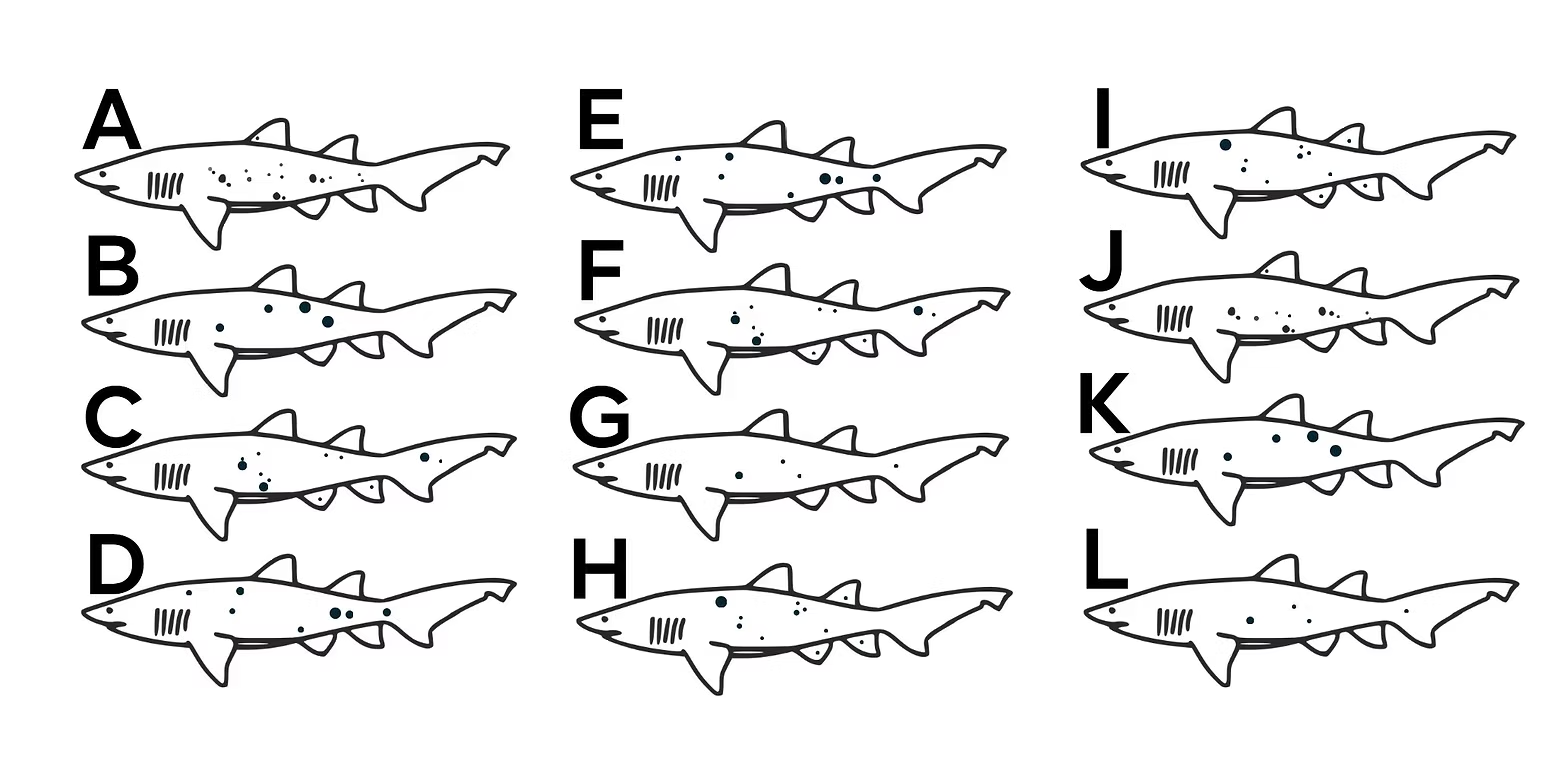
Level 1: Matching pairs
Goal:
Match sharks by spot patterns
Description:
Each shark has a unique pattern. Match the correct pairs using the same technique researchers use.
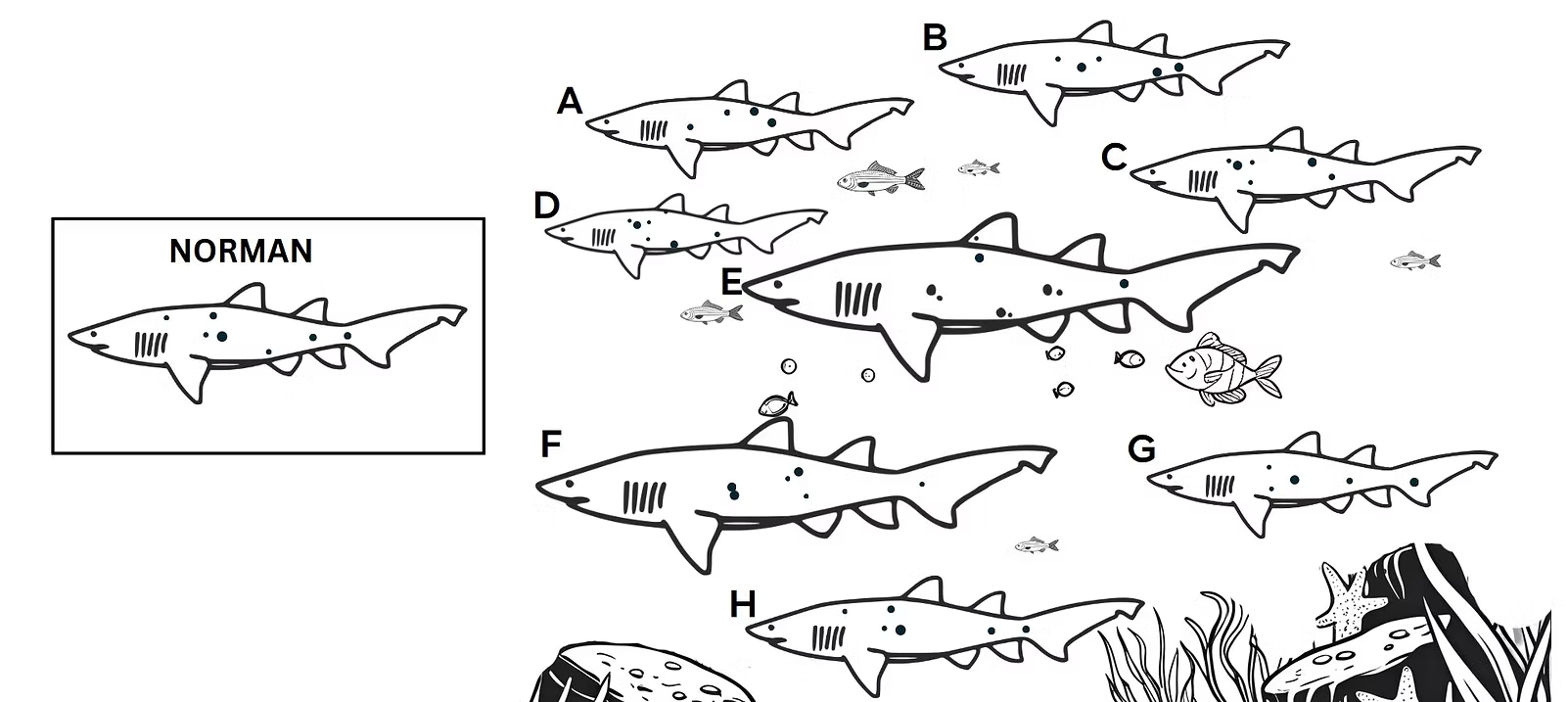
Level 2: Find Norman
Goal:
Spot the correct shark
Description:
Grey nurse sharks have unique spot patterns on their sides. In this puzzle can you find Norman?
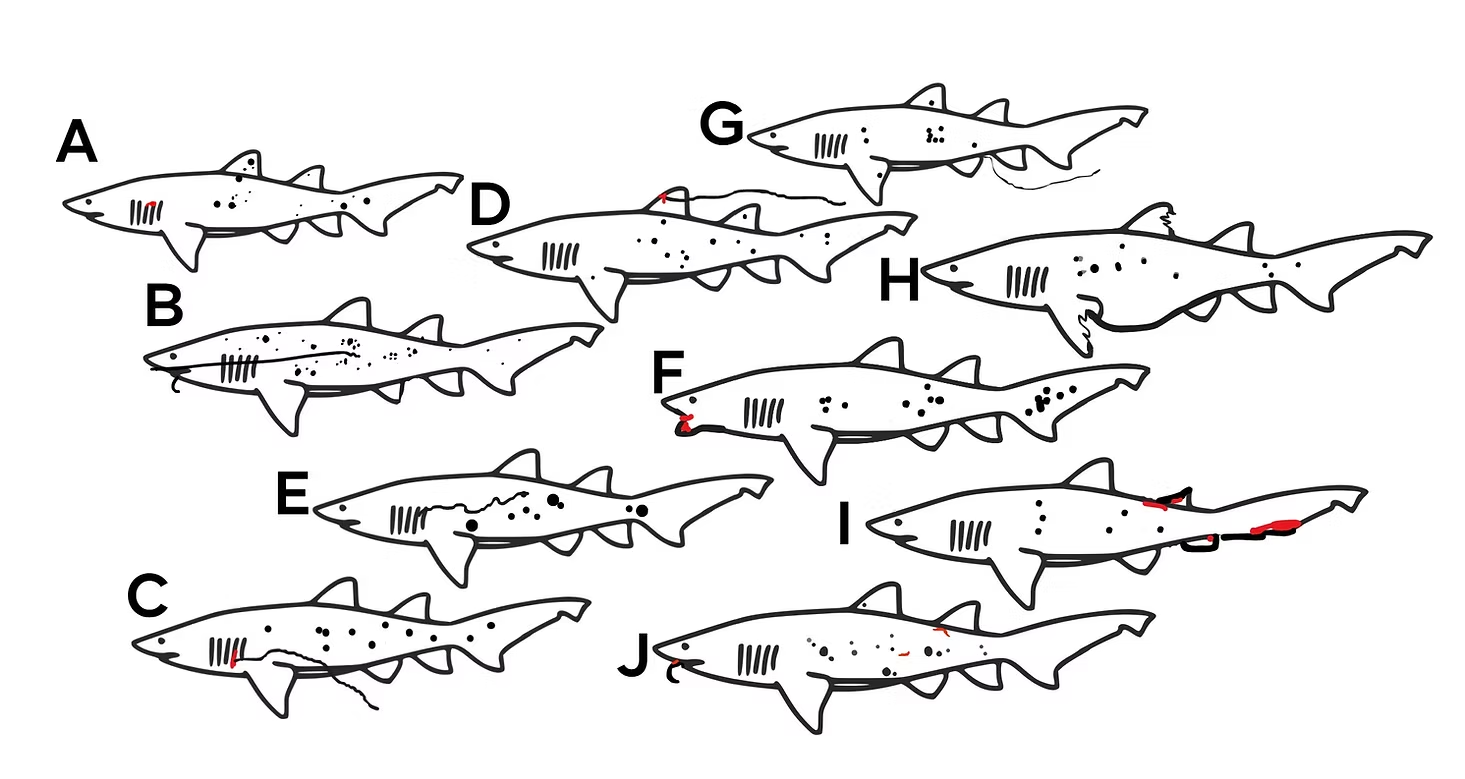
Level 3: Injury Assessment
Goal:
Identify injuries on the sharks
Description:
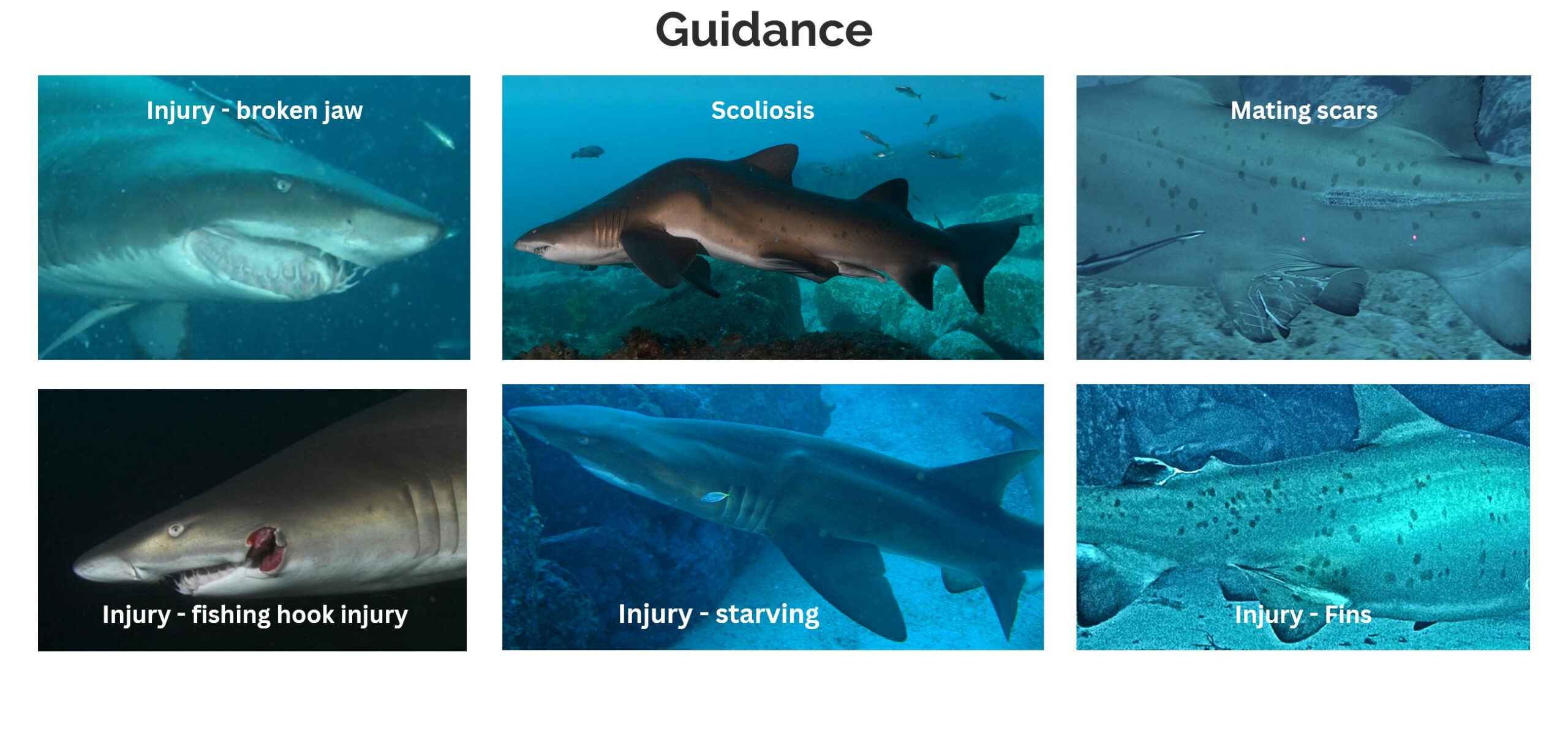
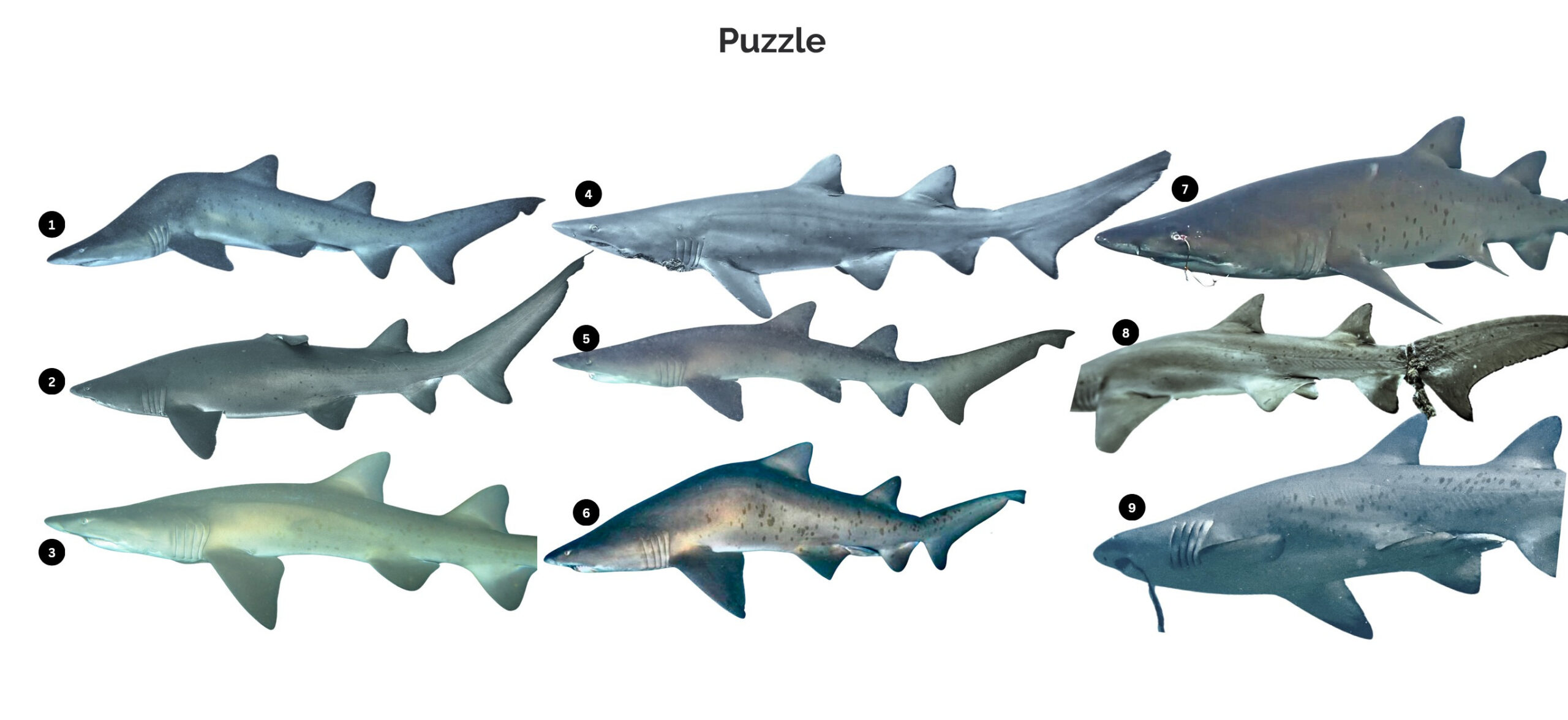
Track individual sharks and spot injuries. Look for signs of fishing injuries, damage to fins, and other scars
Intermediate Level
Take it further. Start thinking like a researcher.
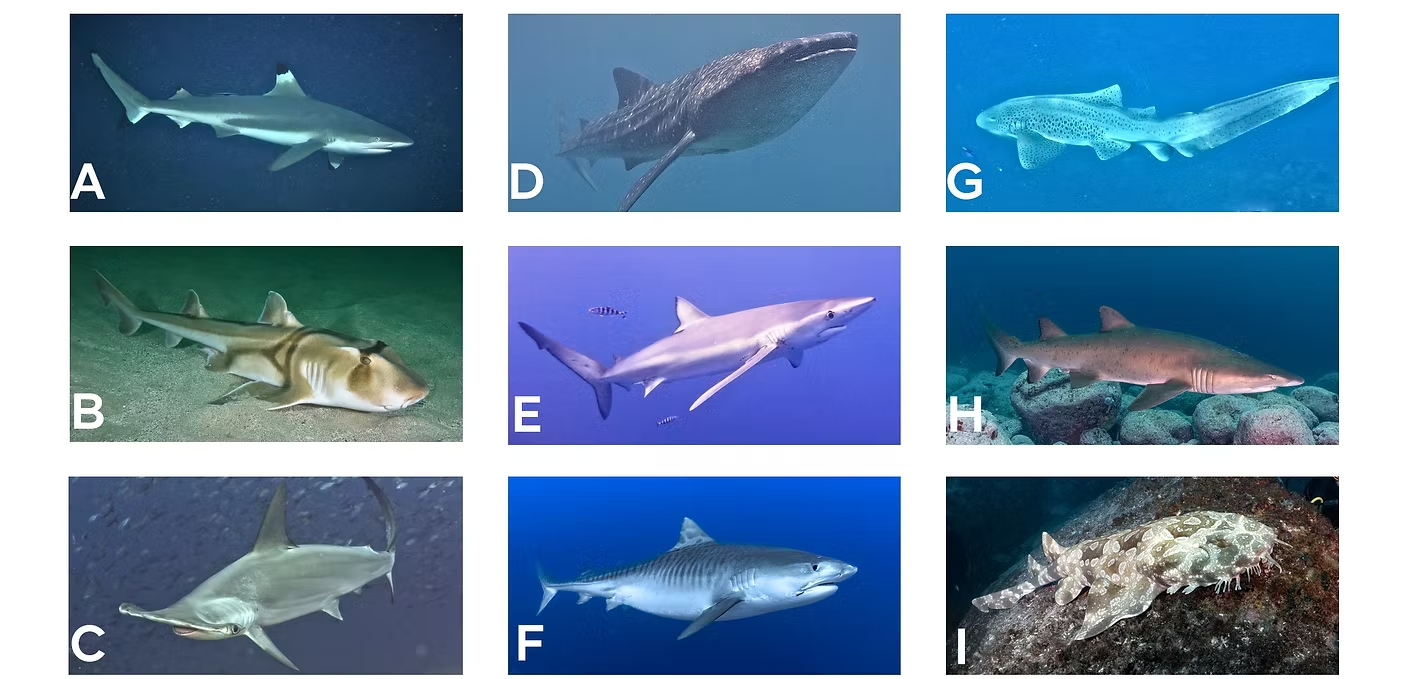
Level 1: Know Your Shark Species
Goal:
Identify the correct species
Description:
There are over 500 shark species. Can you find the grey nurse shark?
Level 2: Matching Sharks
Goal:
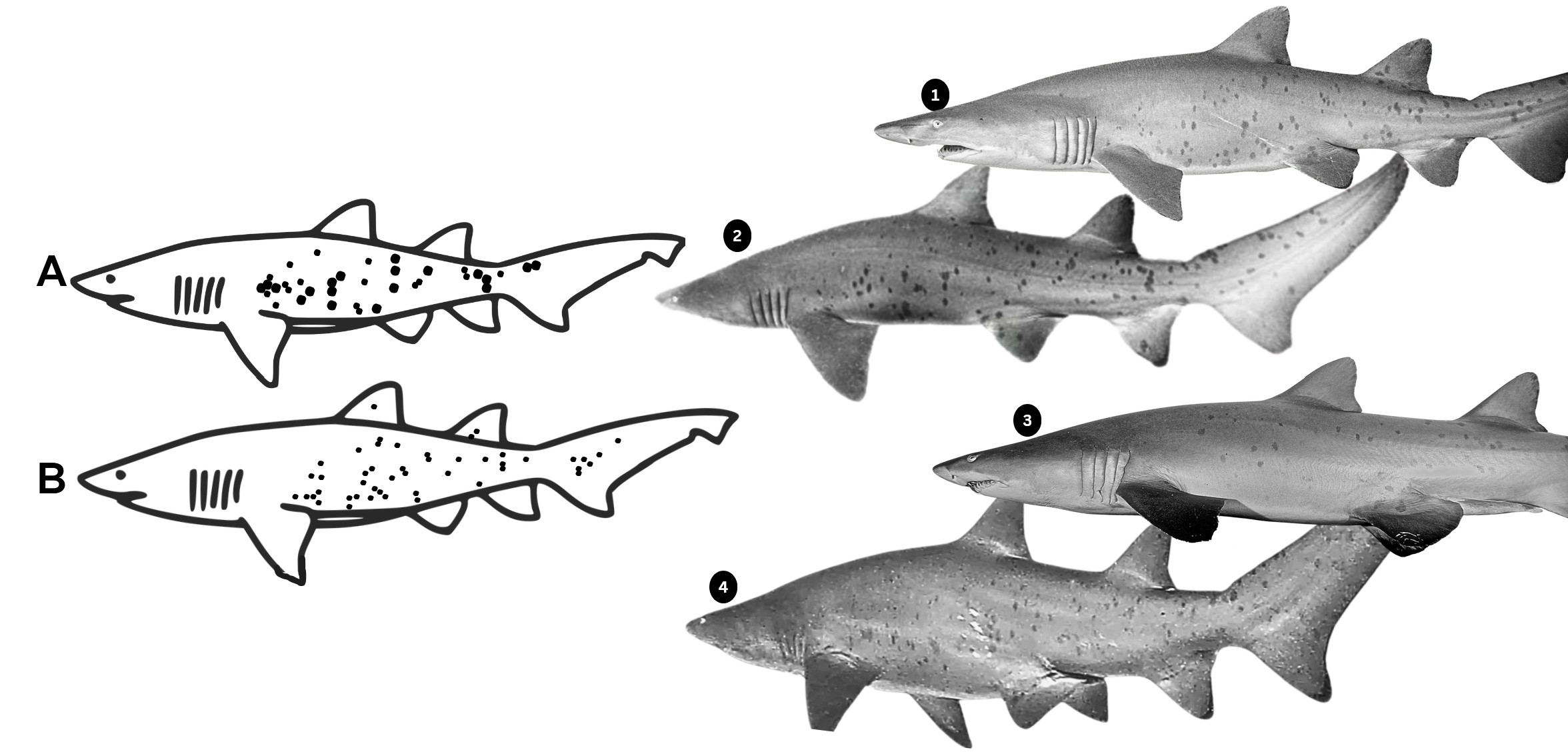
Match the spot patterns described in illustrations A and B with real shark photos 1-4.
Description:
Grey nurse sharks have unique spot patterns on their sides. How good are you at spot mapping?
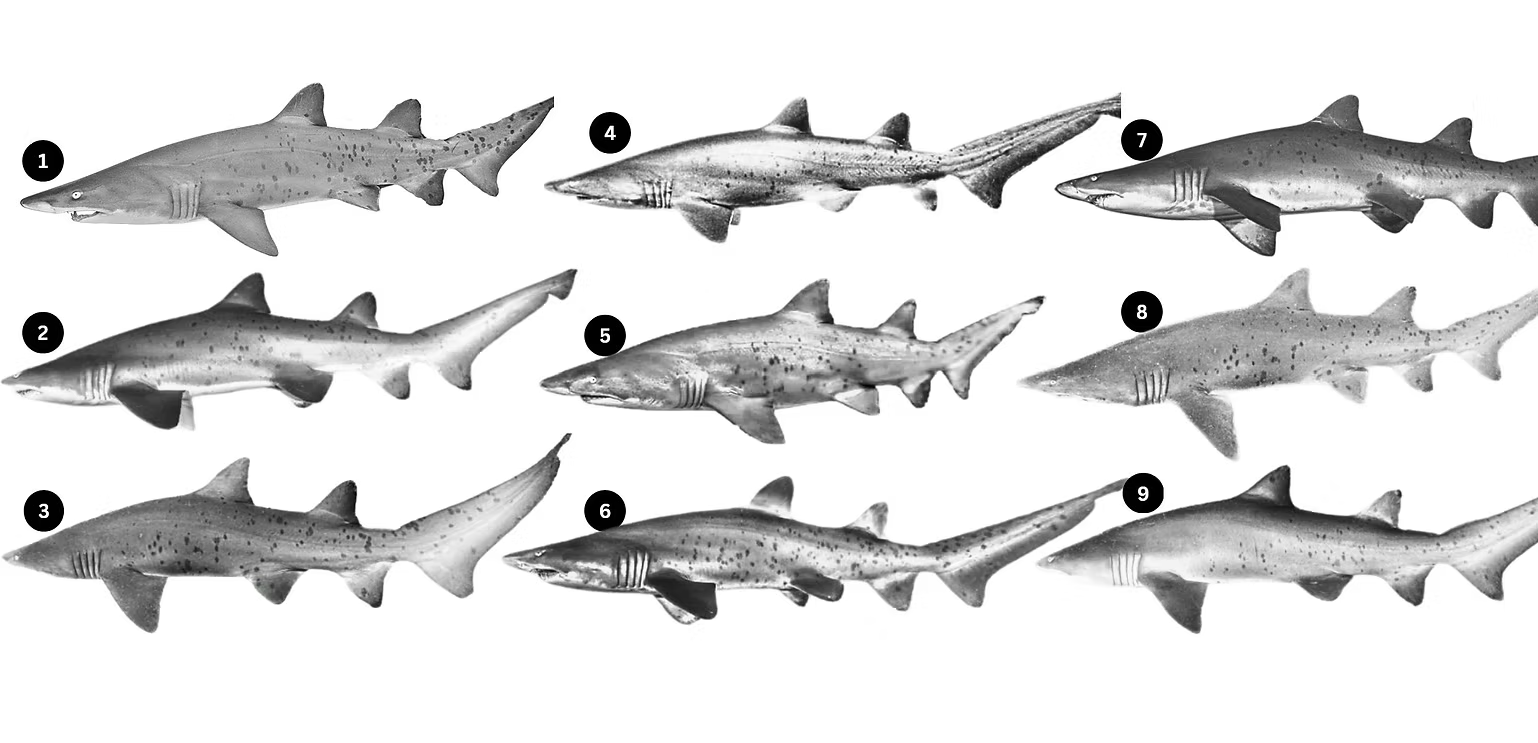
Level 3: Find Rebecca
Goal:
Match a real shark from a database
Description:
Compare real images and identify the same shark across
different photos.
Advanced Level
Now you are working like a real scientist.
Level 1: Identify the shark
Goal:
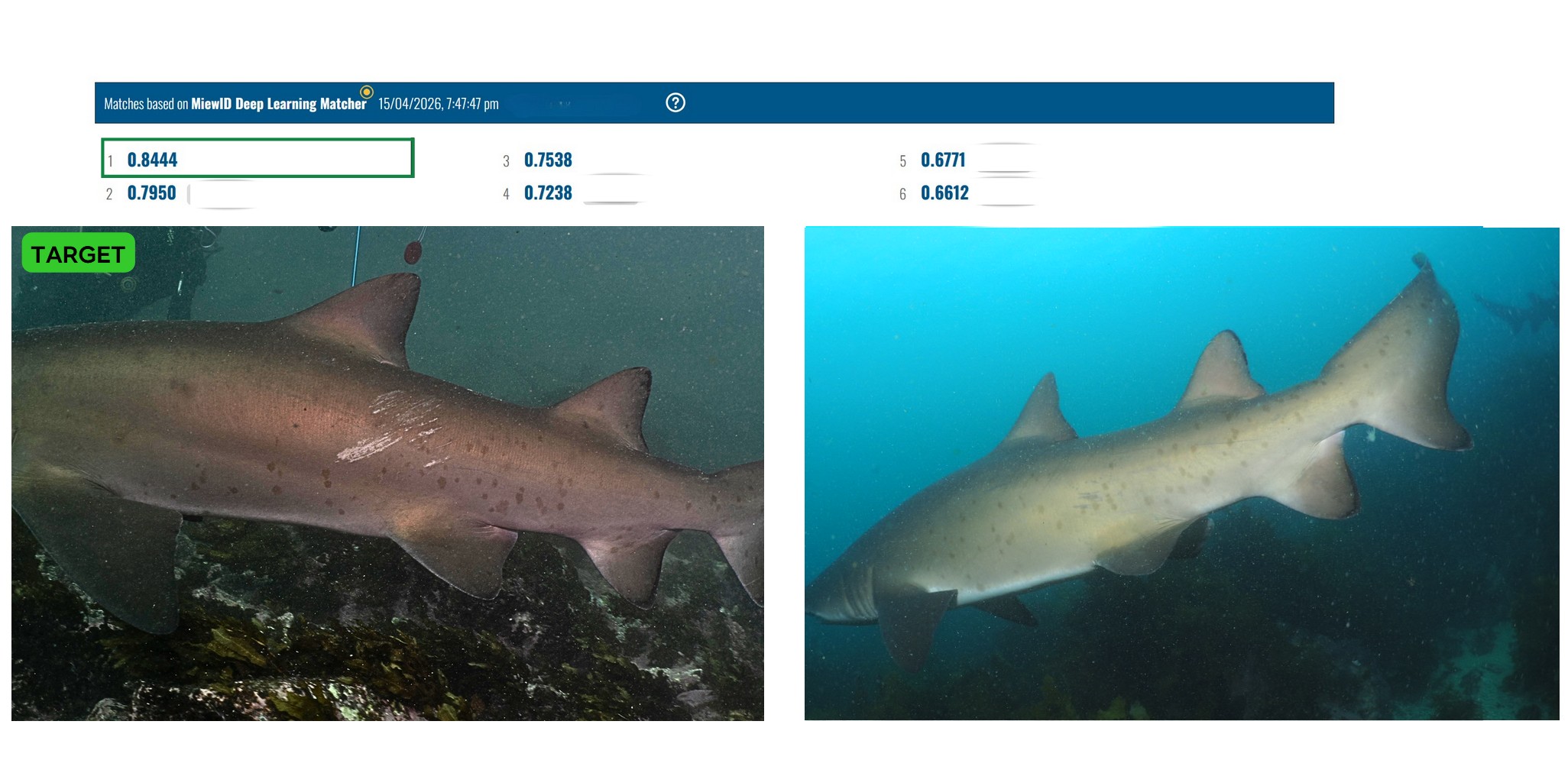
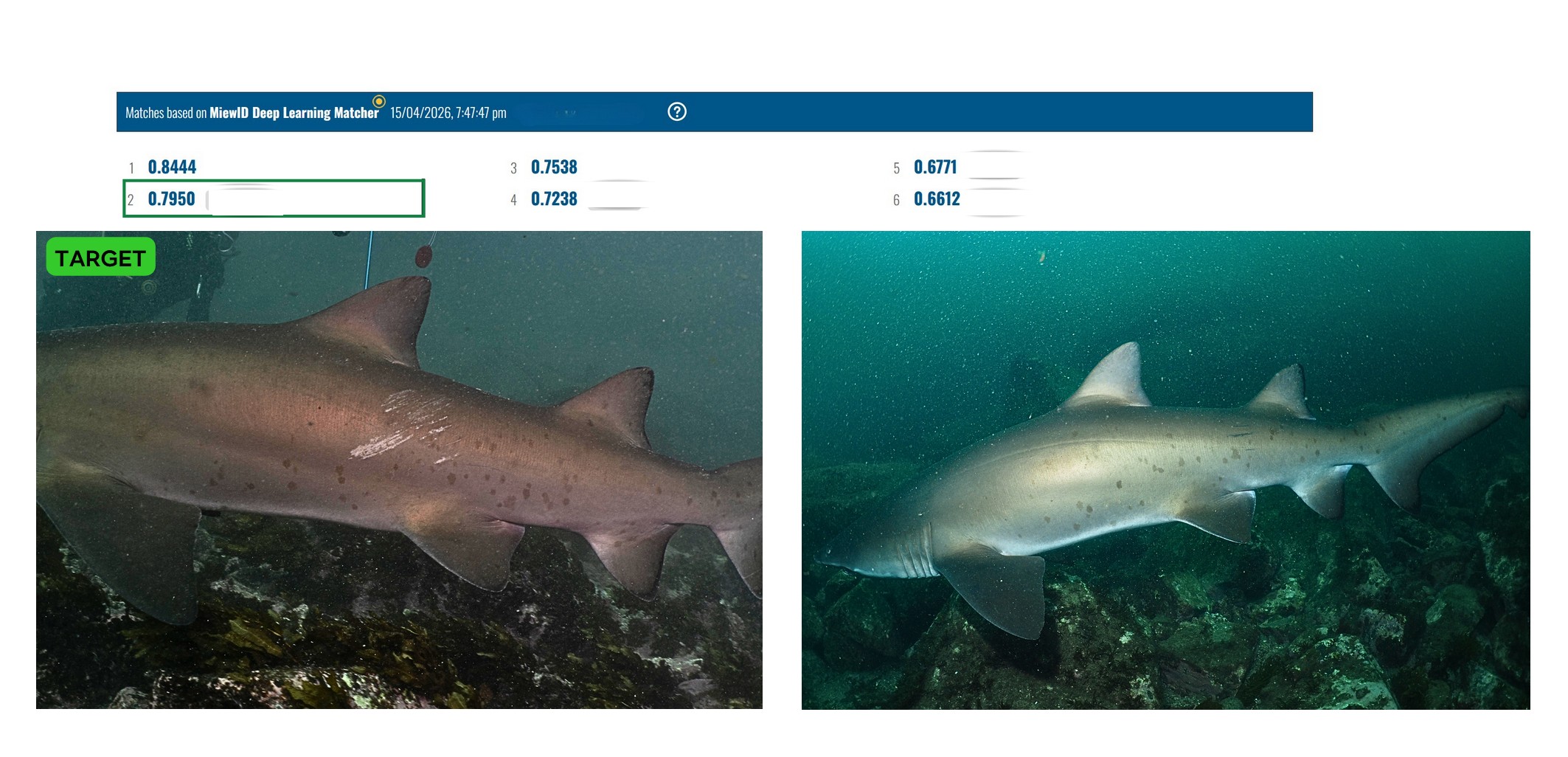
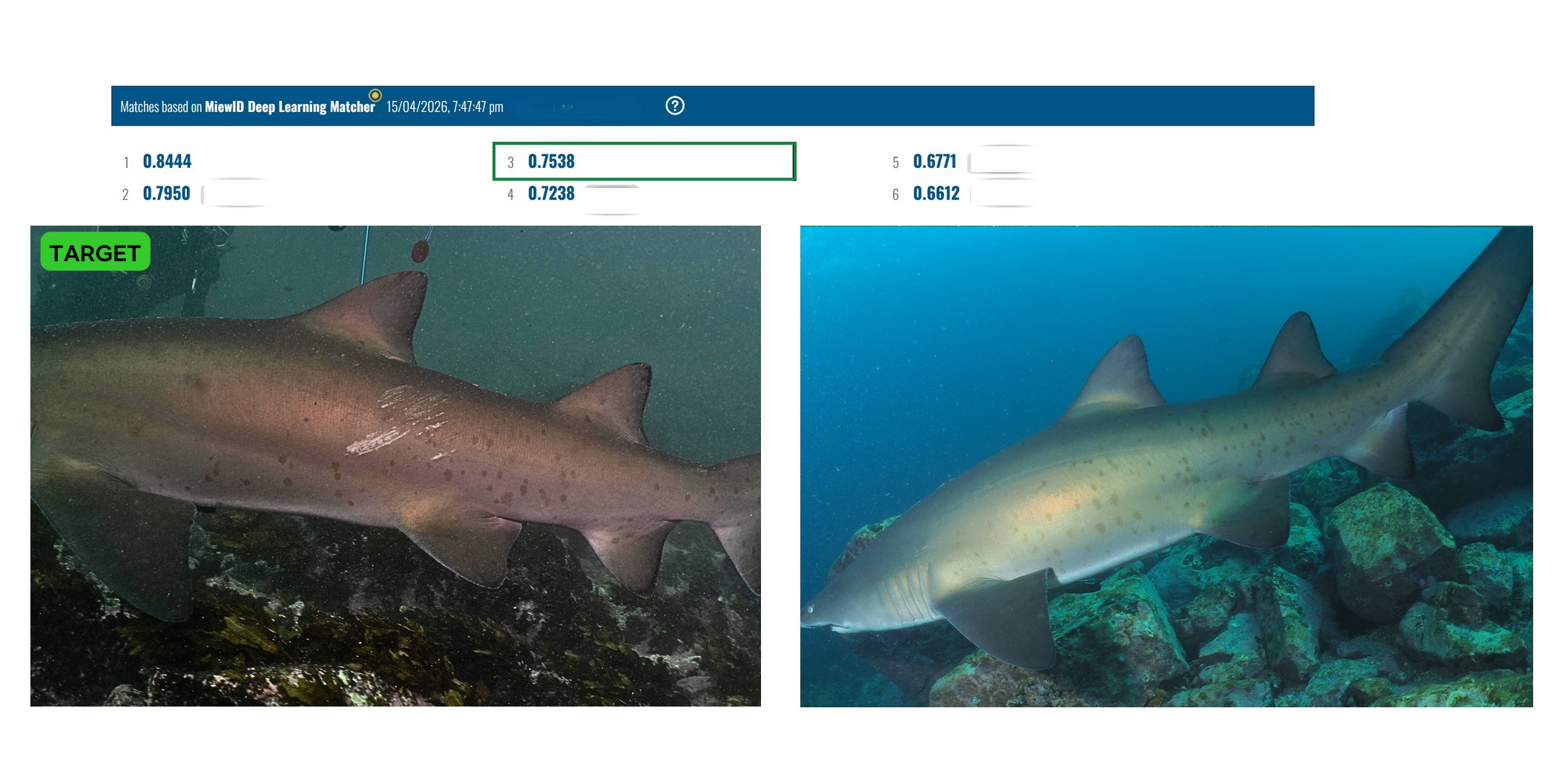
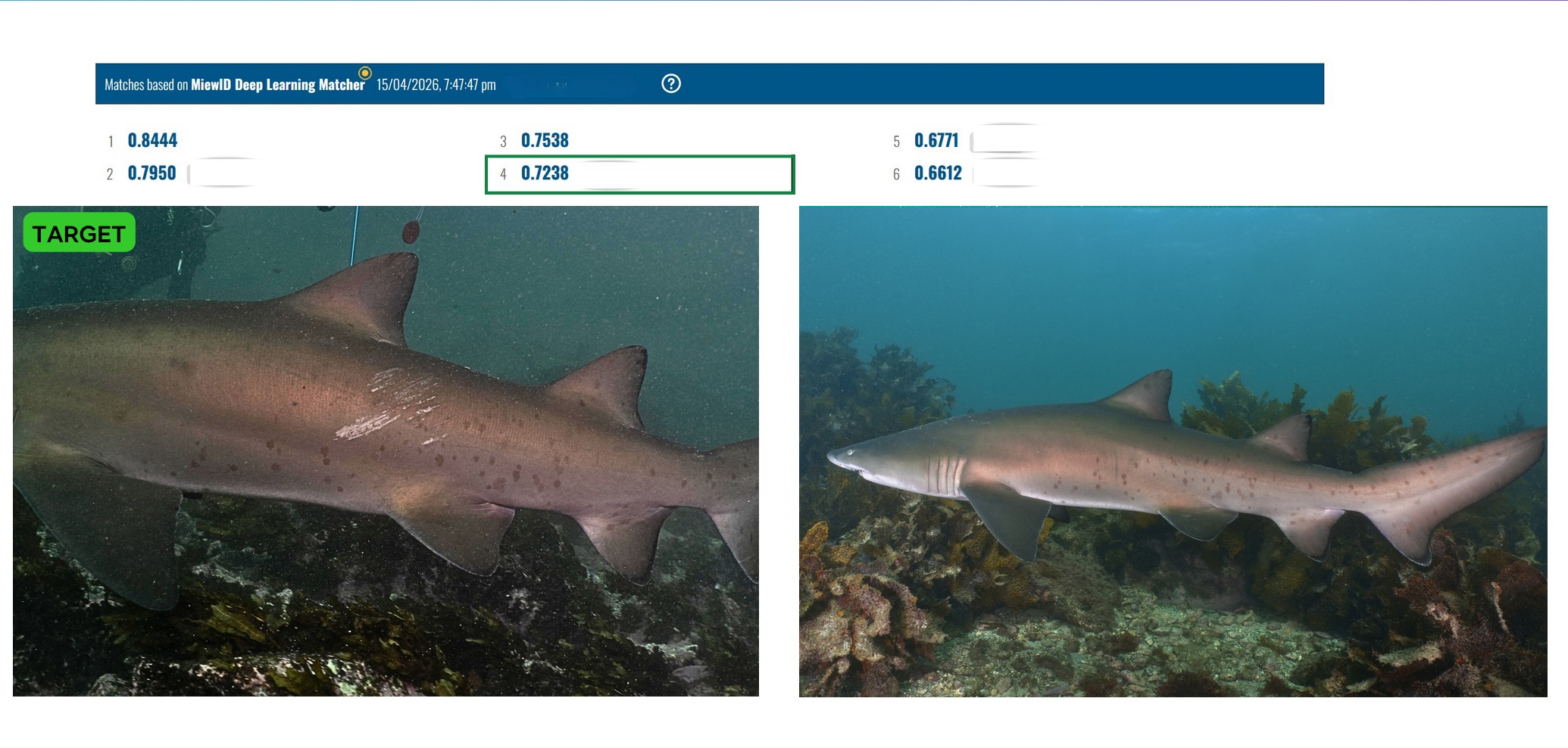
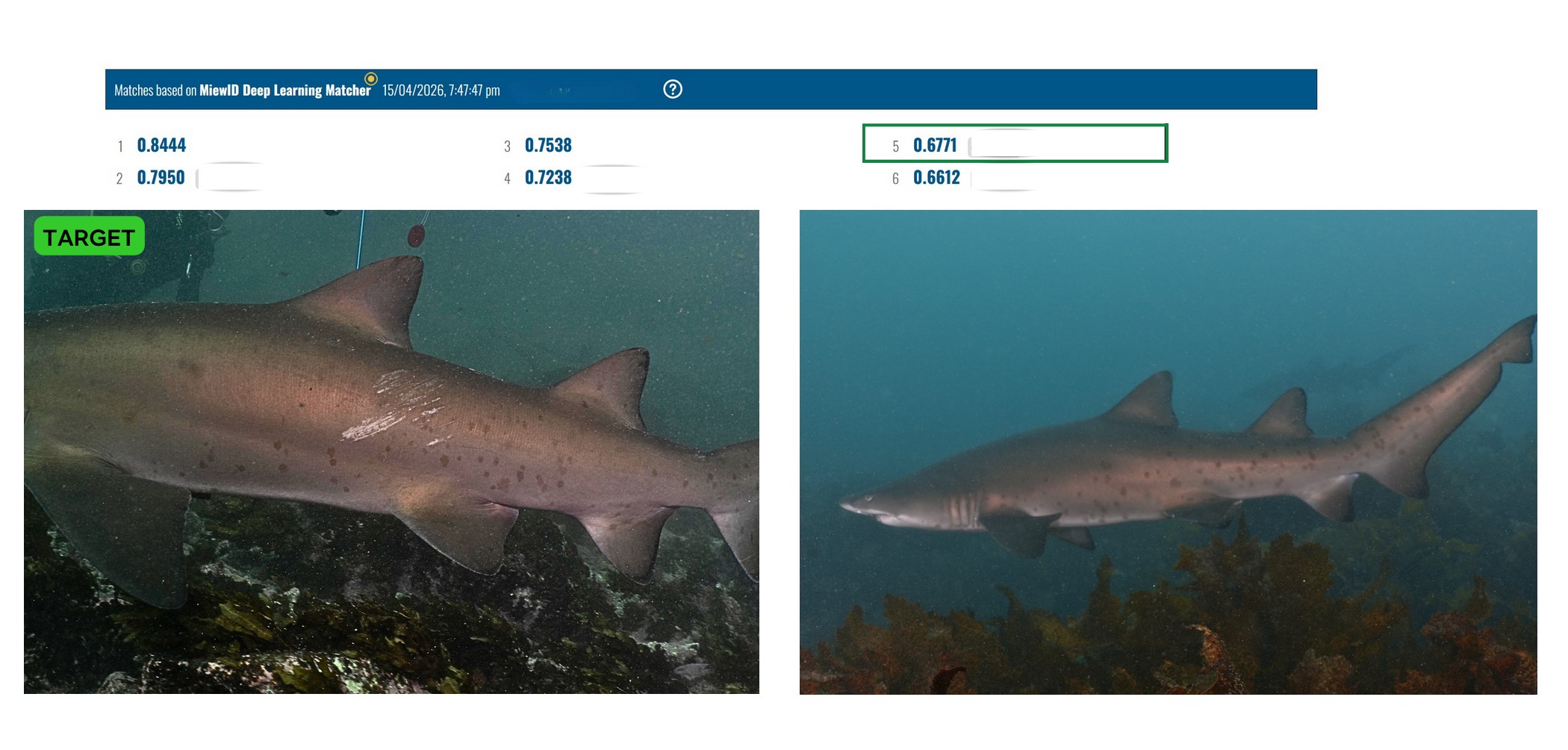
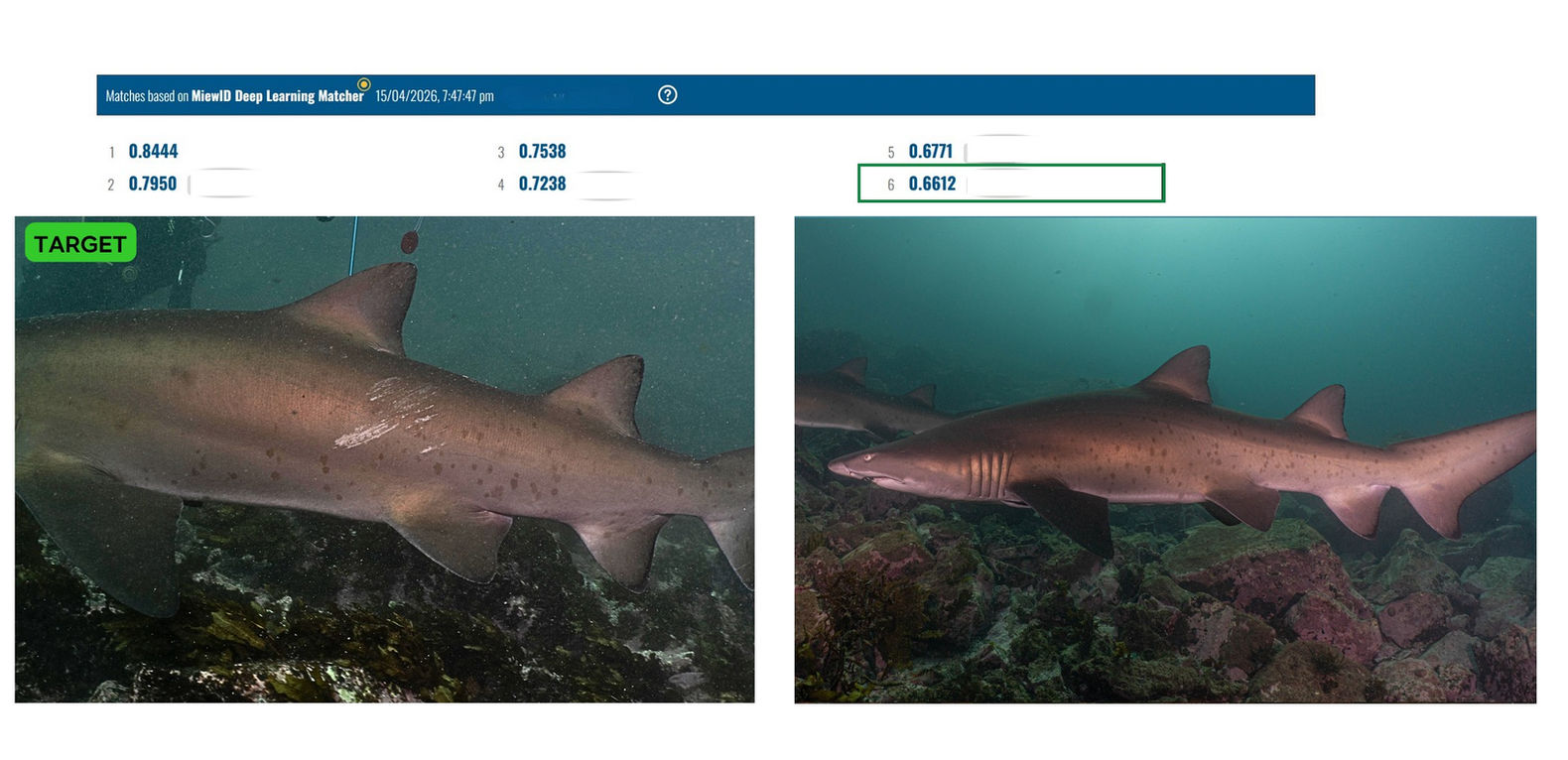
A sneak peak into some of the software we use to identify sharks. Have a look at how it works behind the scenes.
Description:
Review each of the options within this software match to determine the right match. You should find a matching shark from the target image based upon the shark's unique spot pattern. Can you find it? (Scroll through the images to find the match)
Level 2: Quality Control
Goal:
Decide if images are usable for identification
Description:
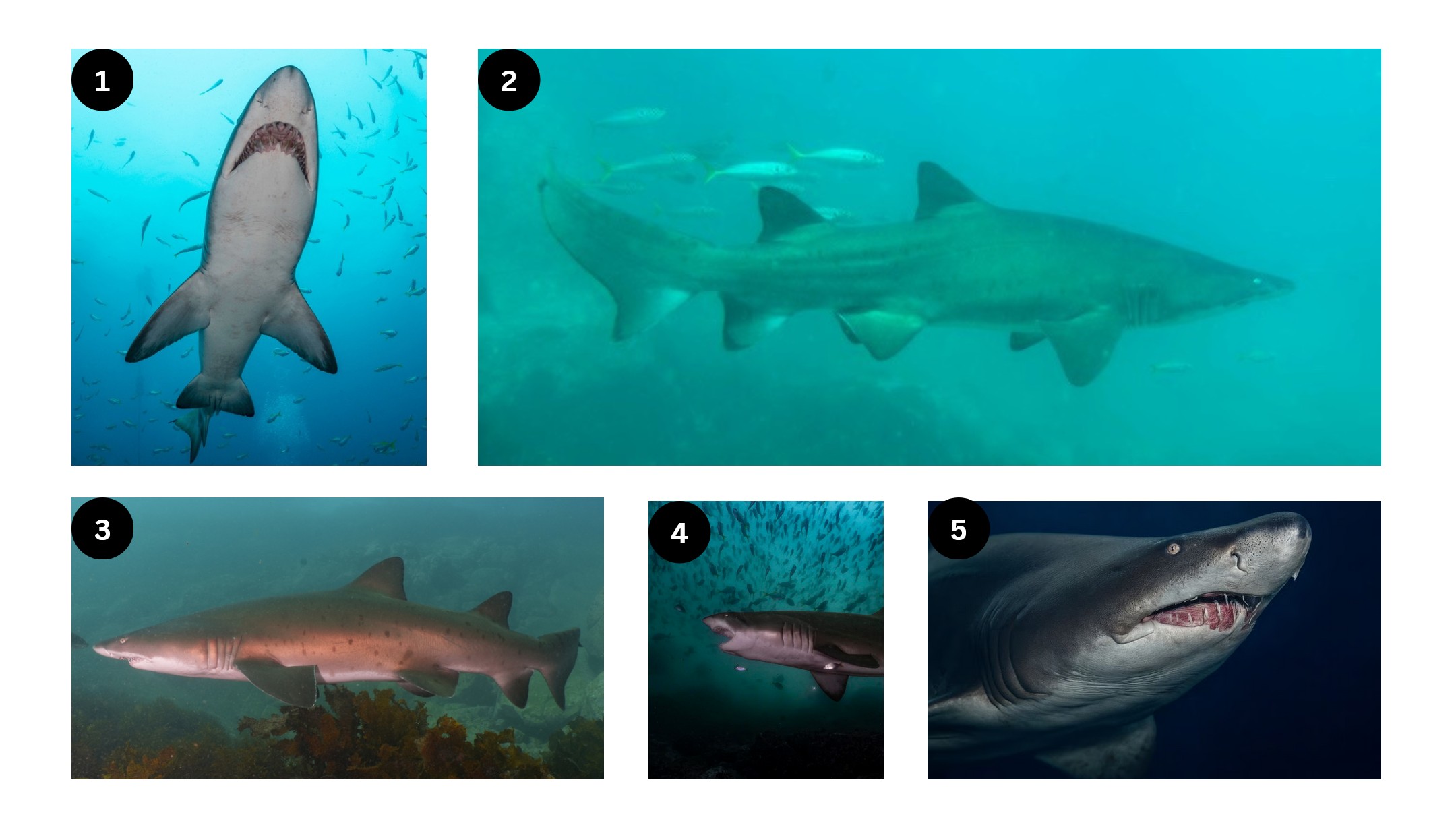
Not every photo is useful. Learn how to assess image
quality like a researcher. Which of these images can be used for identification? If not, why not?
Level 3: Gender & Maturity
Goal:
Identify age and gender
Description:
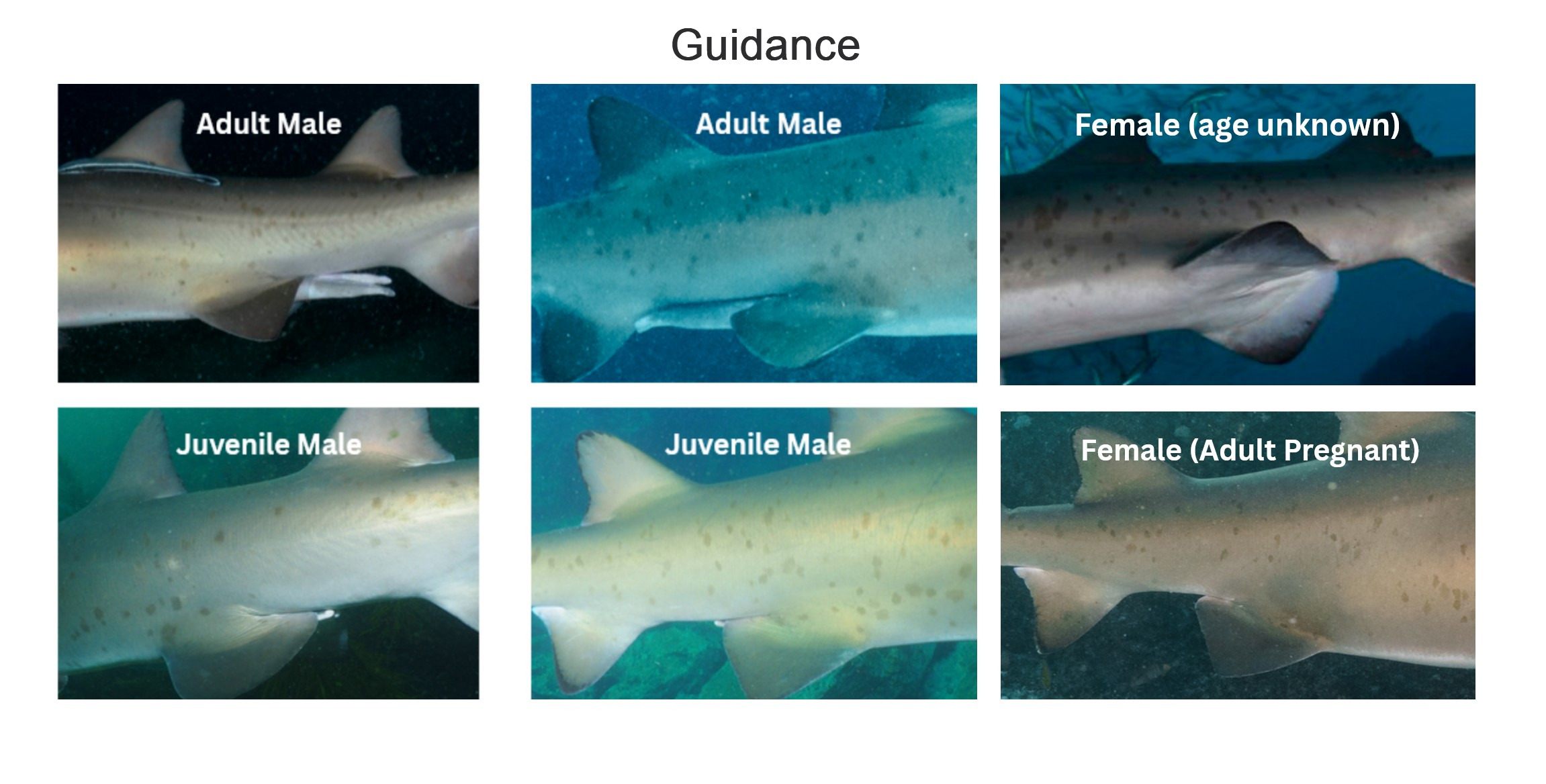
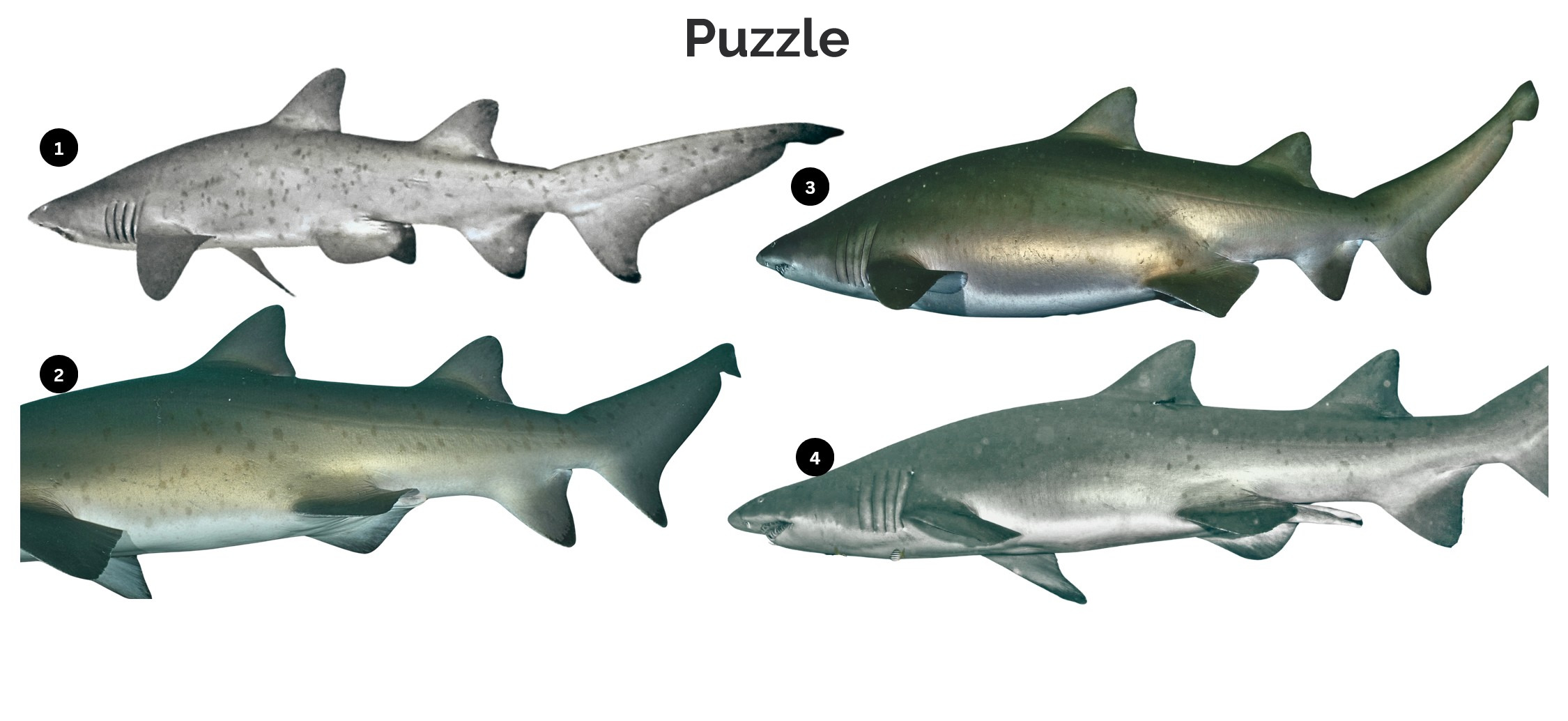
Determine whether sharks are male, female, juvenile, or
adult. Note, the first page is guidance, the second page is your puzzle.
Level 4: Injury Assessment
Goal:
Identify age and gender
Description:
Determine whether sharks are male, female, juvenile, or
adult. Note, the first page is guidance, the second page is your puzzle.
Think you have got what it takes?
If you want to get more involved and become an ambassador, email your answers to us at spotashark@gmail.com
Spot A Shark is a volunteer-led initiative dedicated to the protection of the Grey Nurse Shark. To maintain our momentum and ensure our resources are used effectively, we are looking for committed individuals to join our core team.
If you are passionate about marine conservation and can commit to a minimum of 10 hours per week on a volunteer basis, we would love to hear from you. Please email spotashark@gmail.com with a brief summary of your skills and how you would like to contribute.
Other ways to help include:
- Citizen science: Organise dives at known shark aggregation sites to capture and share photographs
- Grow our network: Talk to your local dive clubs. The more photographers we have in the water, the better our data gets.
- Advocacy: Use your voice to promote our work and fight for positive change. You can review our "Raise Awareness" page to learn how to help within your sphere of influence, and you can review our "Contact your MP" page to learn more.
- Donate to help rescues: Support ongoing shark rescues by donating to our partners at Sea World Foundation.
- Donate to us directly: Support our active campaigns and research through making a financial contribution. We can collect tax-deductible donations through our partners at the CID Foundation.