Habitats
Aggregation Sites
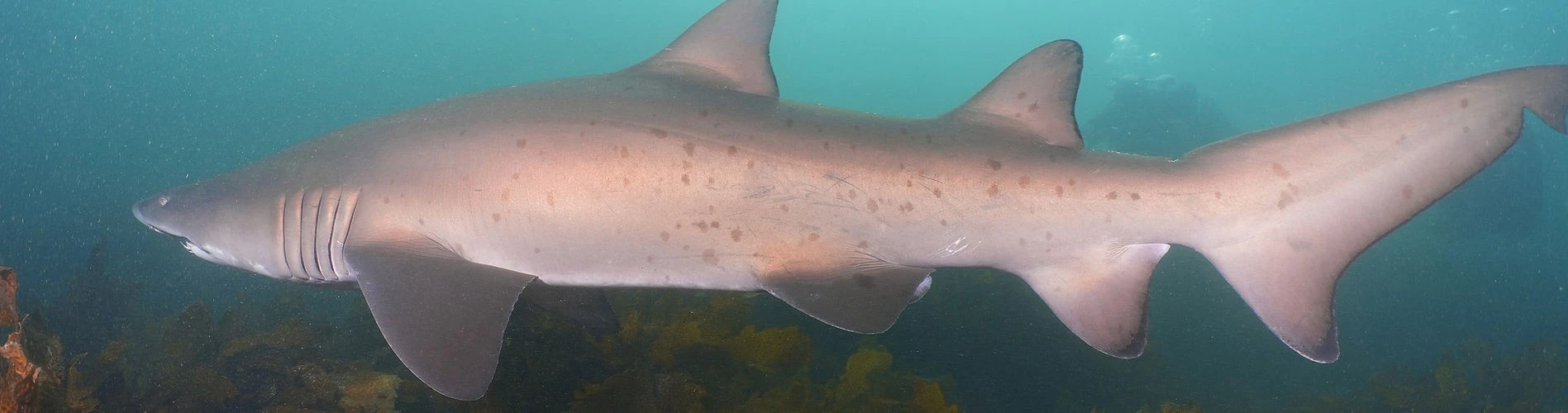
The species Carcharias taurus can be found around the world including Australia, South Africa and USA. Each population has been found to be independent of each other and genetically distinct.
It is common that the locals call each population a different name, which can become confusing, but Grey Nurse sharks, Sand Tiger sharks and Ragged Tooth sharks are all of the same species.
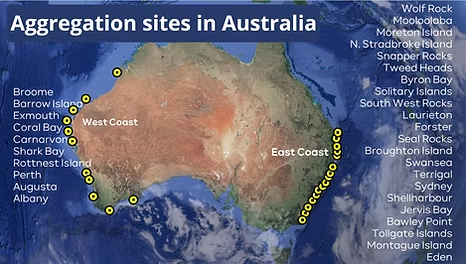
In Australia, there are two distinct populations. One is in the west coast of Australia, and the other is in the east coast.
Grey nurse sharks rarely are alone - they like to hang out in numbers, so if you see one you will likely see more. There are a number of aggregation sites along the coast but on a single day it is unlikely every single one will be used.
Habitats
Grey Nurse Sharks prefer sites with specific underwater topography, including:
- Sandy-Bottomed Gutters: They are often found hovering in deep, sandy-bottomed gutters between rocky reefs. These areas provide protection from strong currents.
- Underwater Caves & Overhangs: During the day, they use these spaces to rest. It is common to see them swimming in circles hiding under these overhangs.
- Rocky Reefs & Islands: They favour coastal islands and prominent rocky outcrops, where waves make the water splashes against rocks create oxygenated zones along the continental shelf.
It is common for fishers, swimmers, snorkellers and divers to use the same spaces as Grey Nurse sharks, which can create the misconception that they are in higher numbers than they actually are.
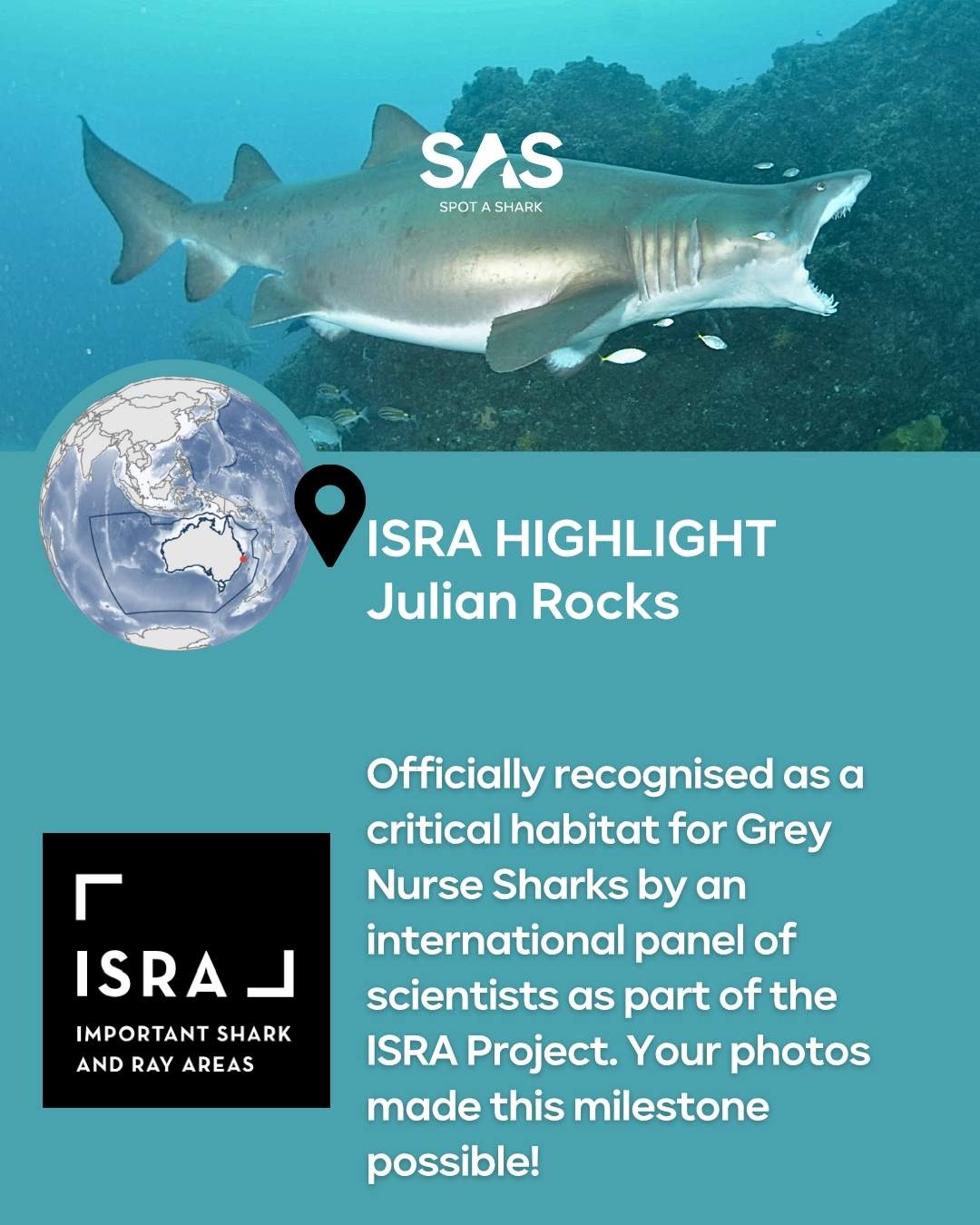
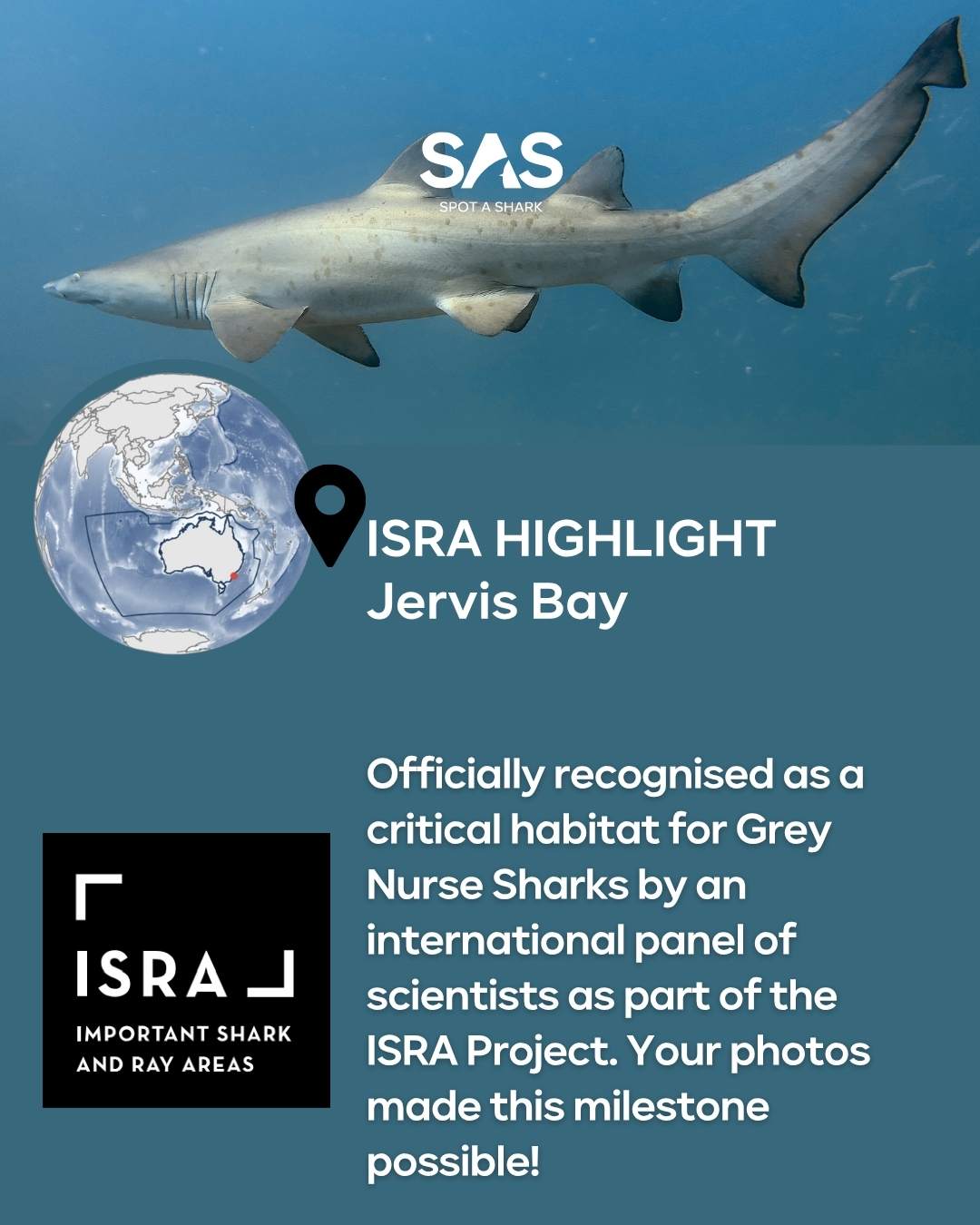
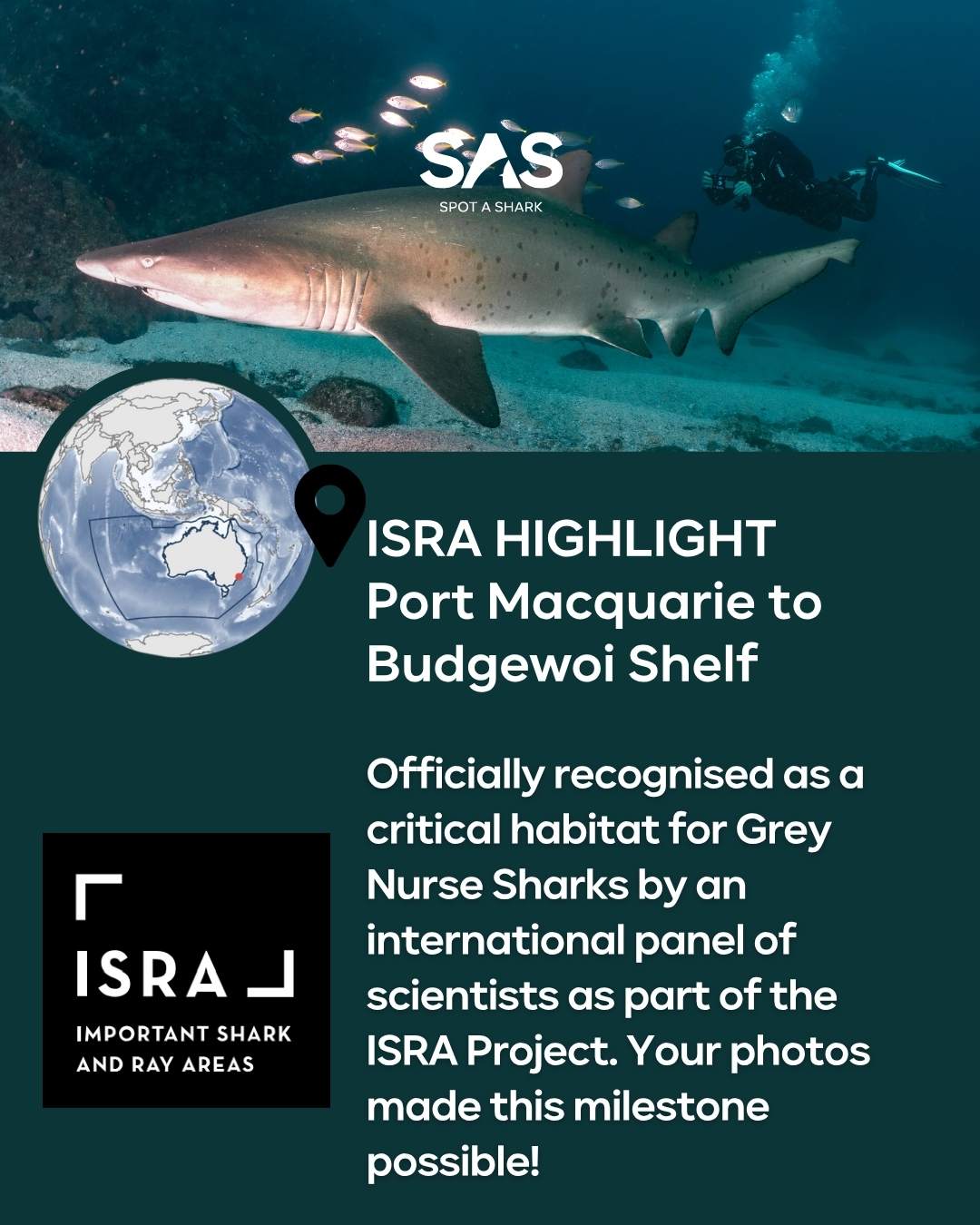
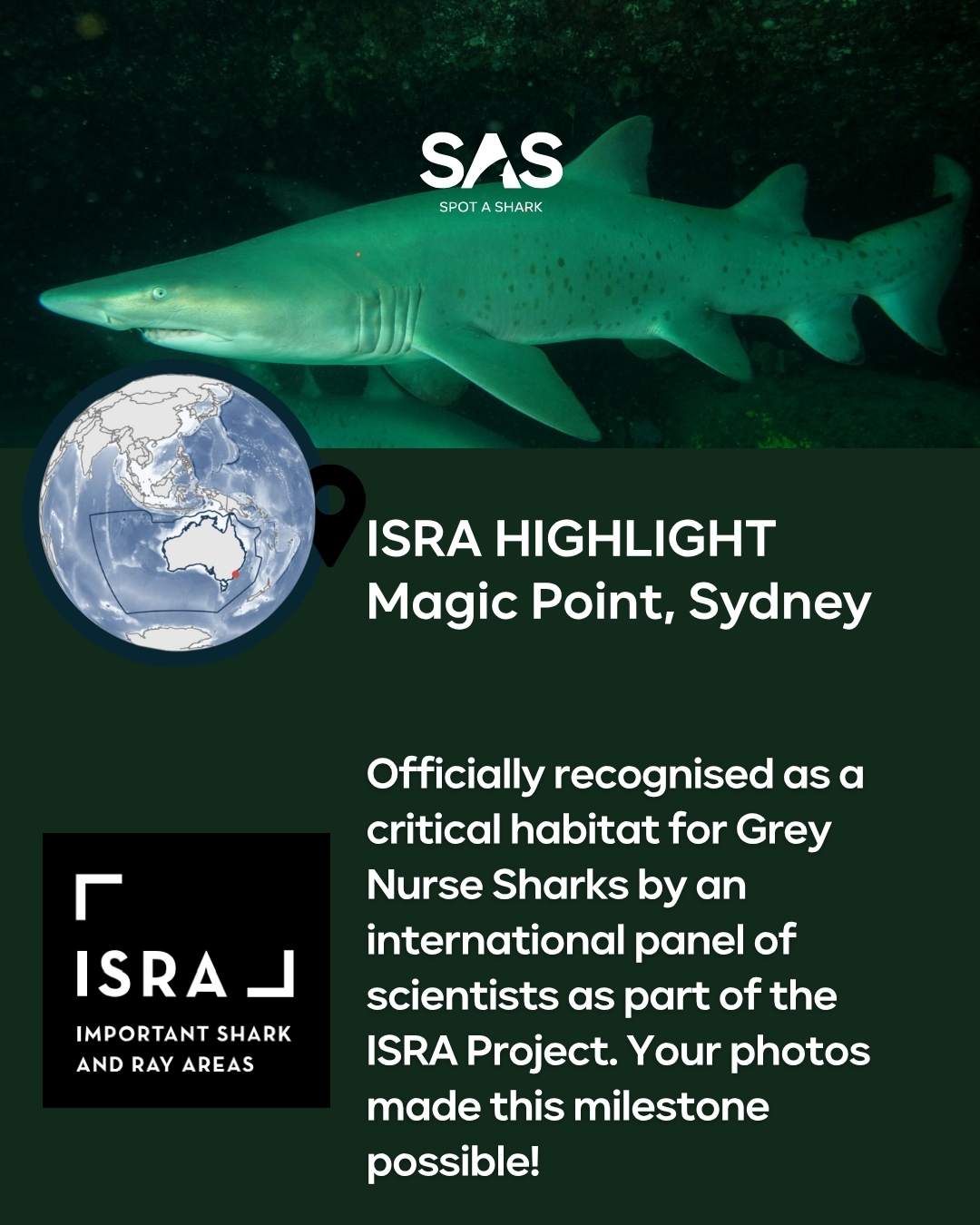
Important Shark and Ray Areas
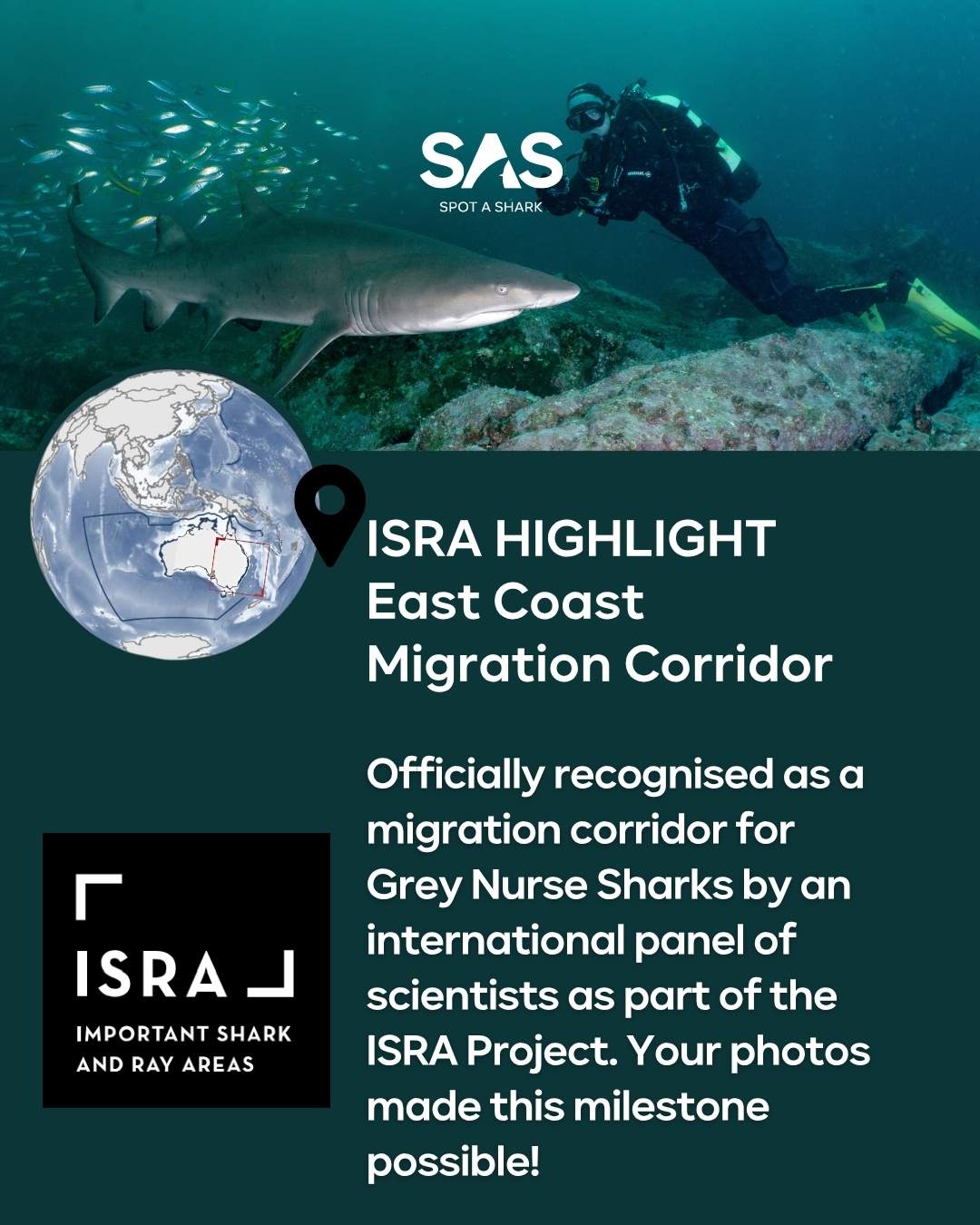
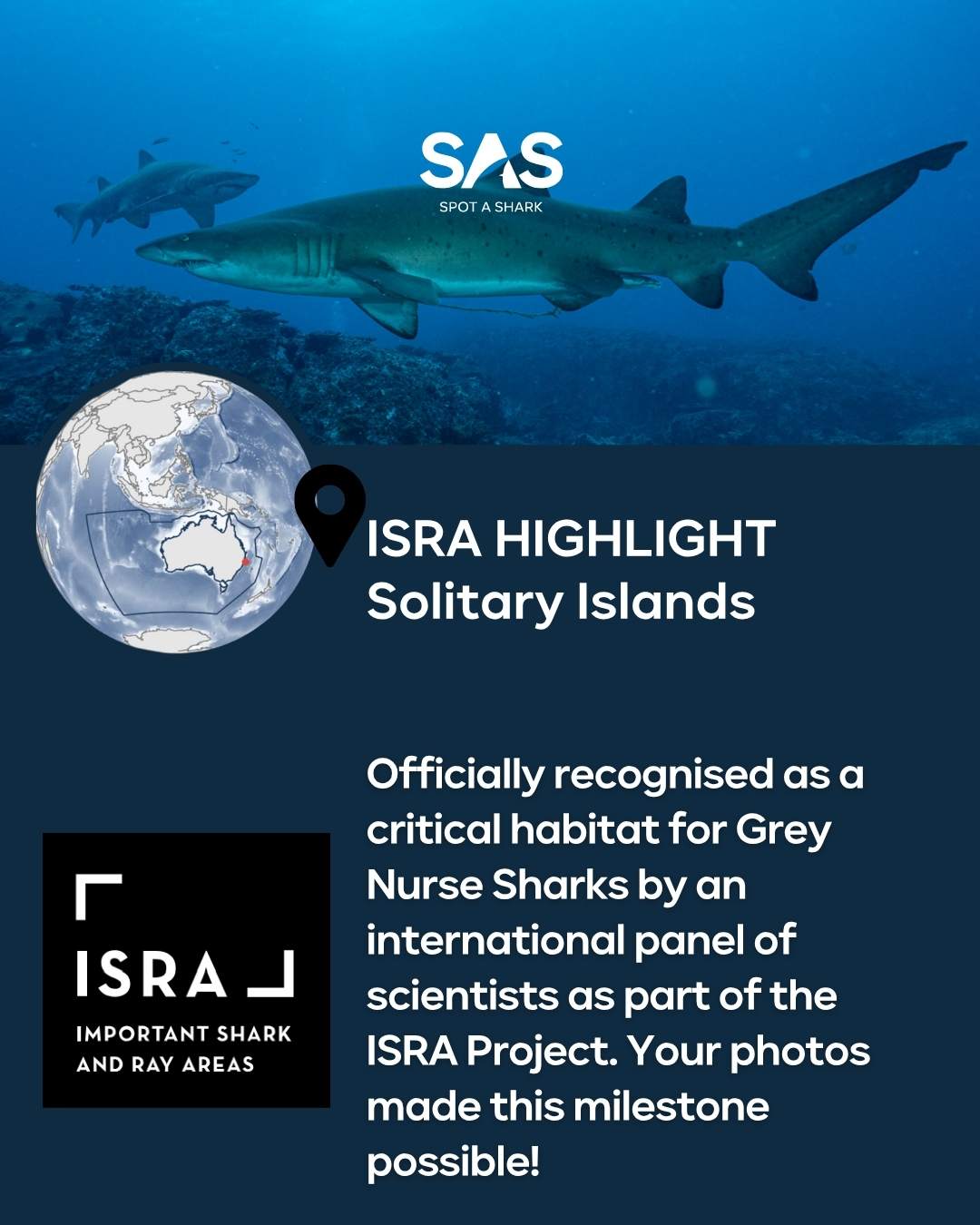
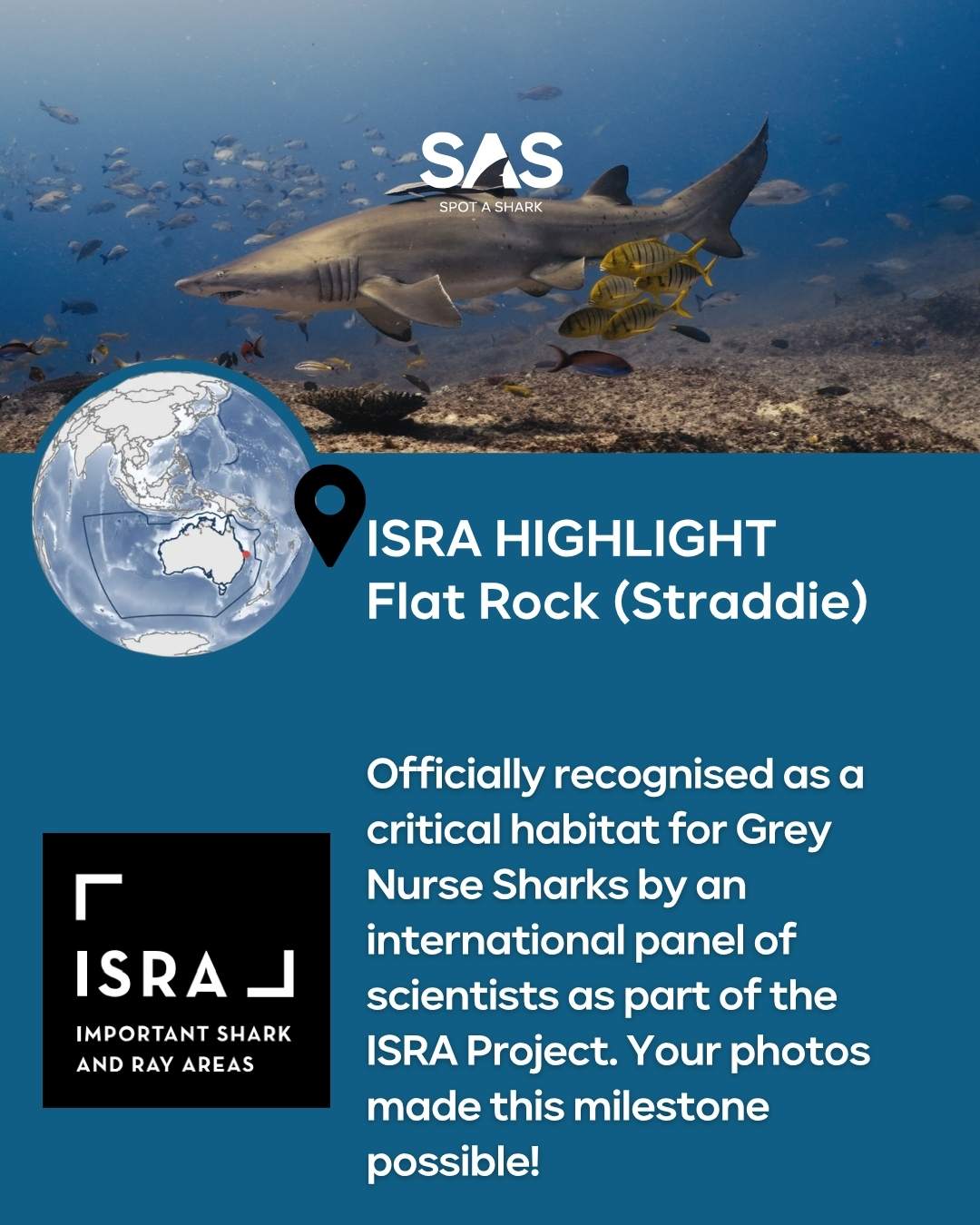
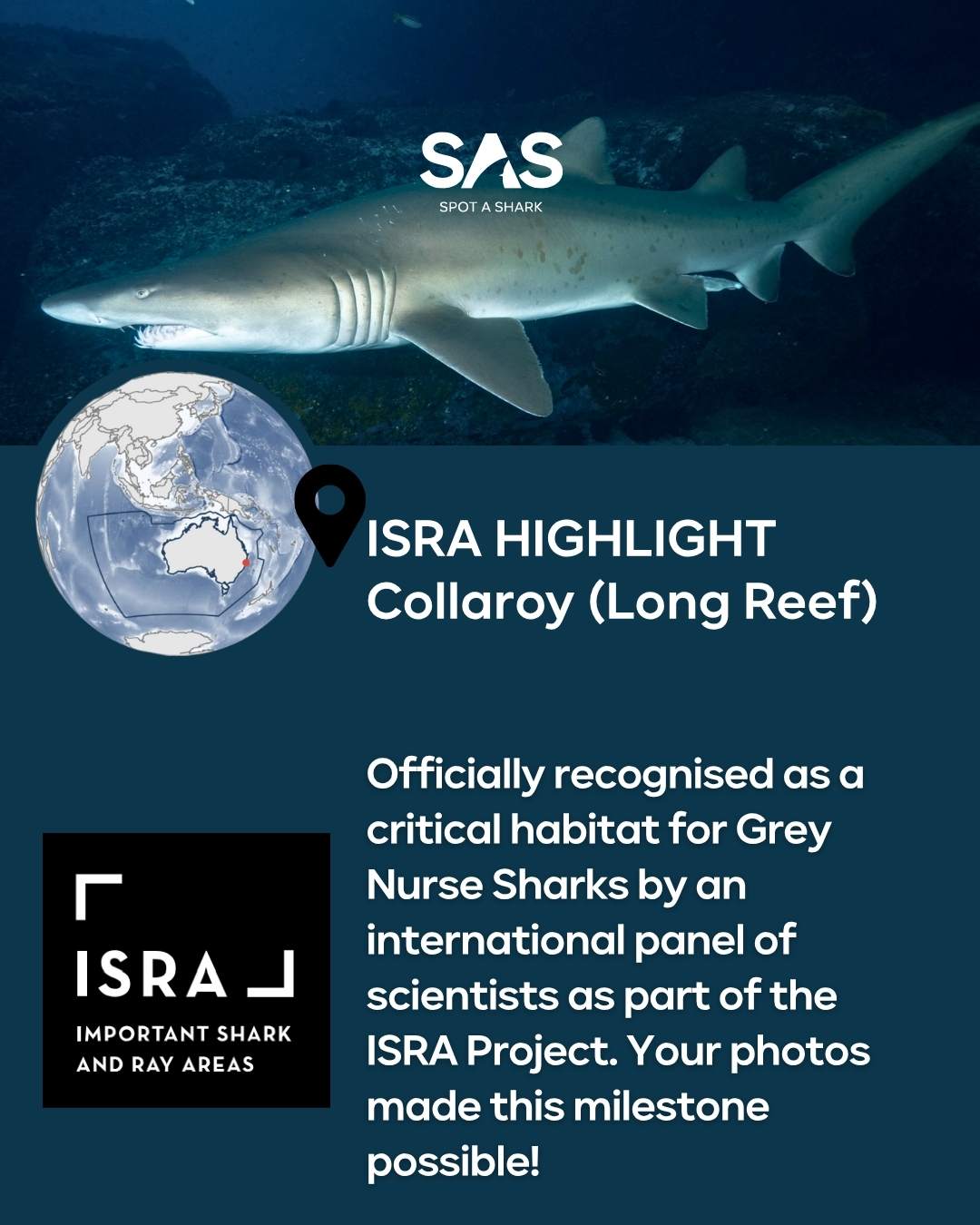
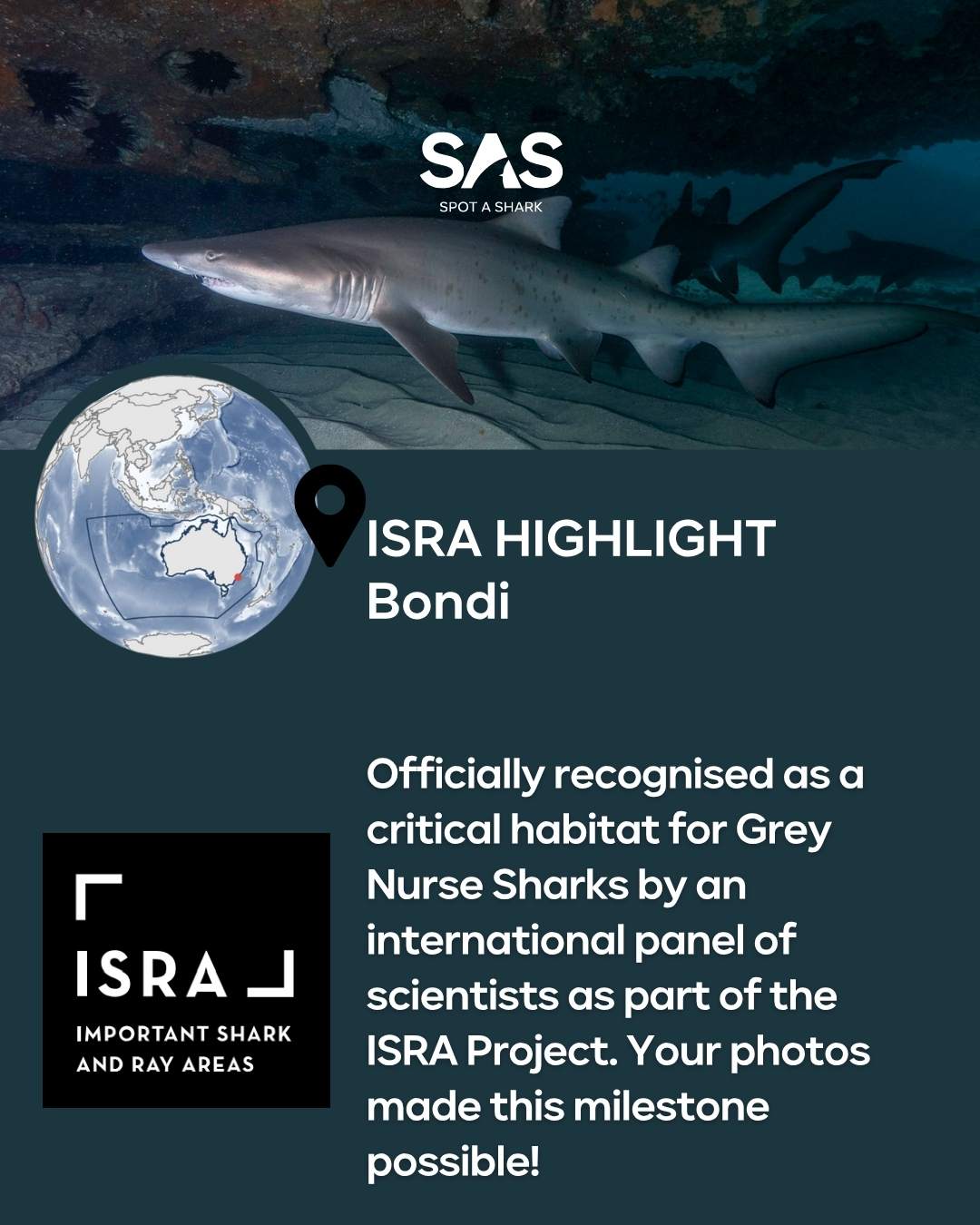
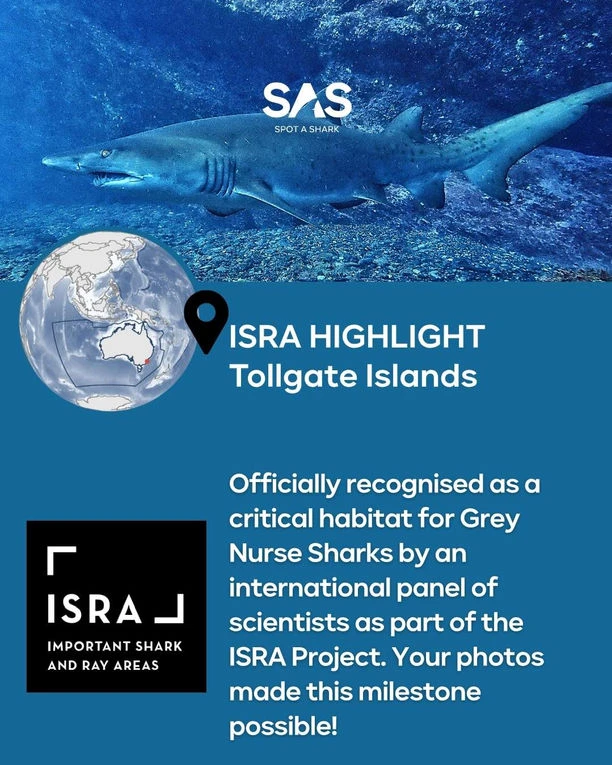
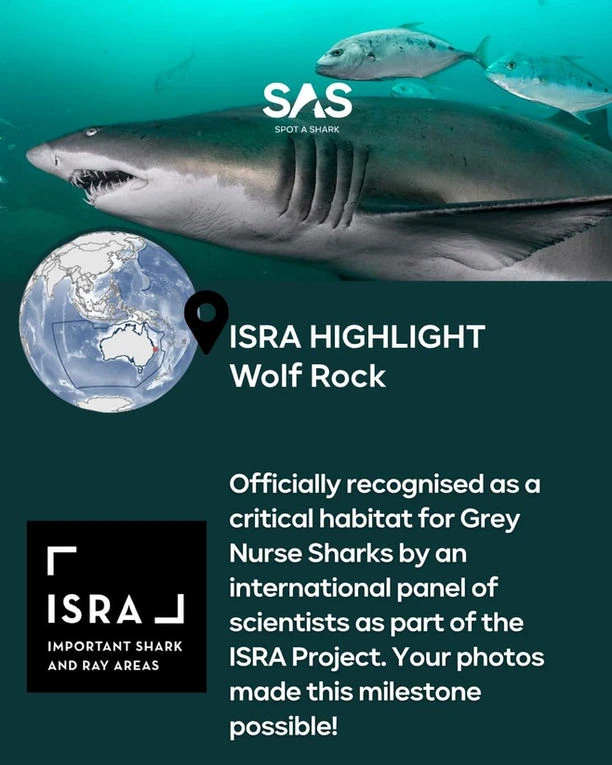
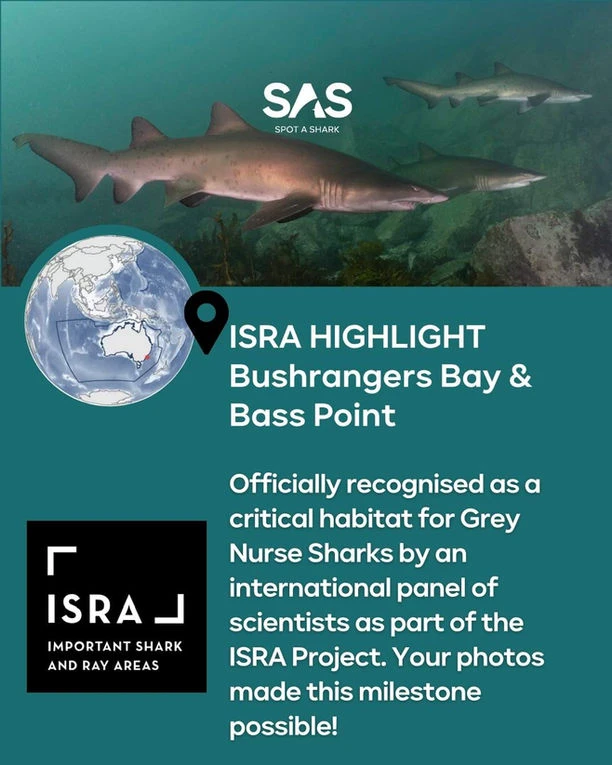
The Important Shark and Ray Areas (ISRA) project is a global initiative led by the IUCN Species Survival Commission Shark Specialist Group. Much like "Important Bird Areas," ISRAs are a science-based tool used to identify the most vital "addresses" on Earth for the survival of sharks, rays, and chimaeras.
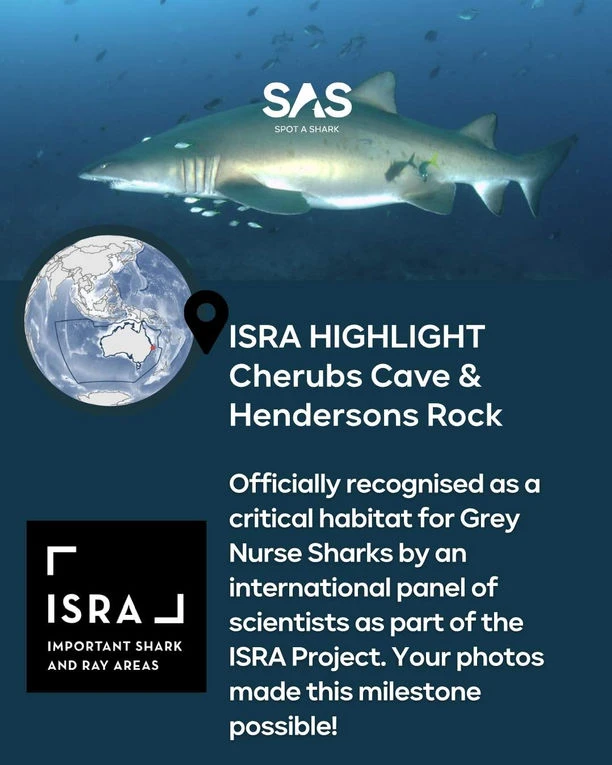
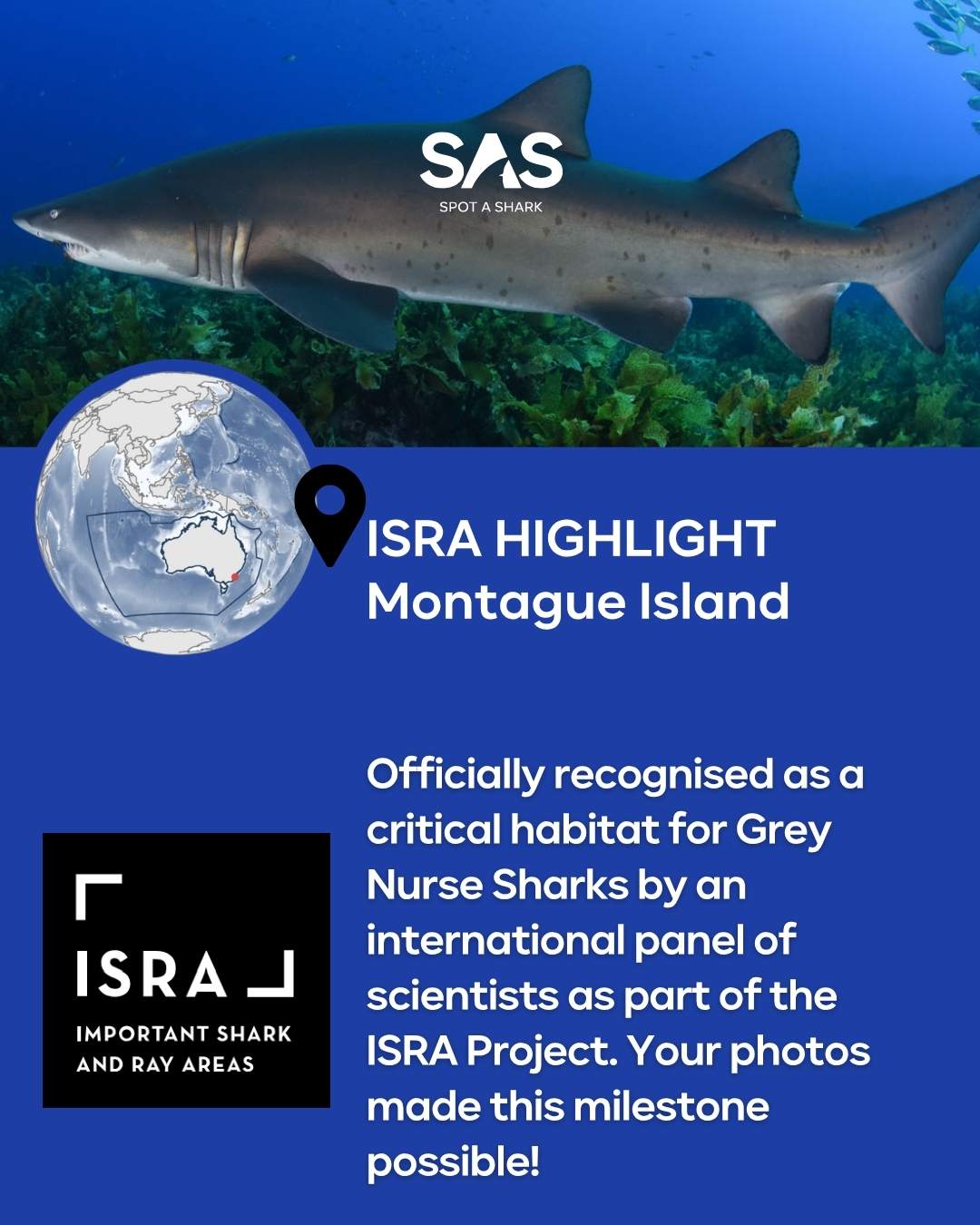
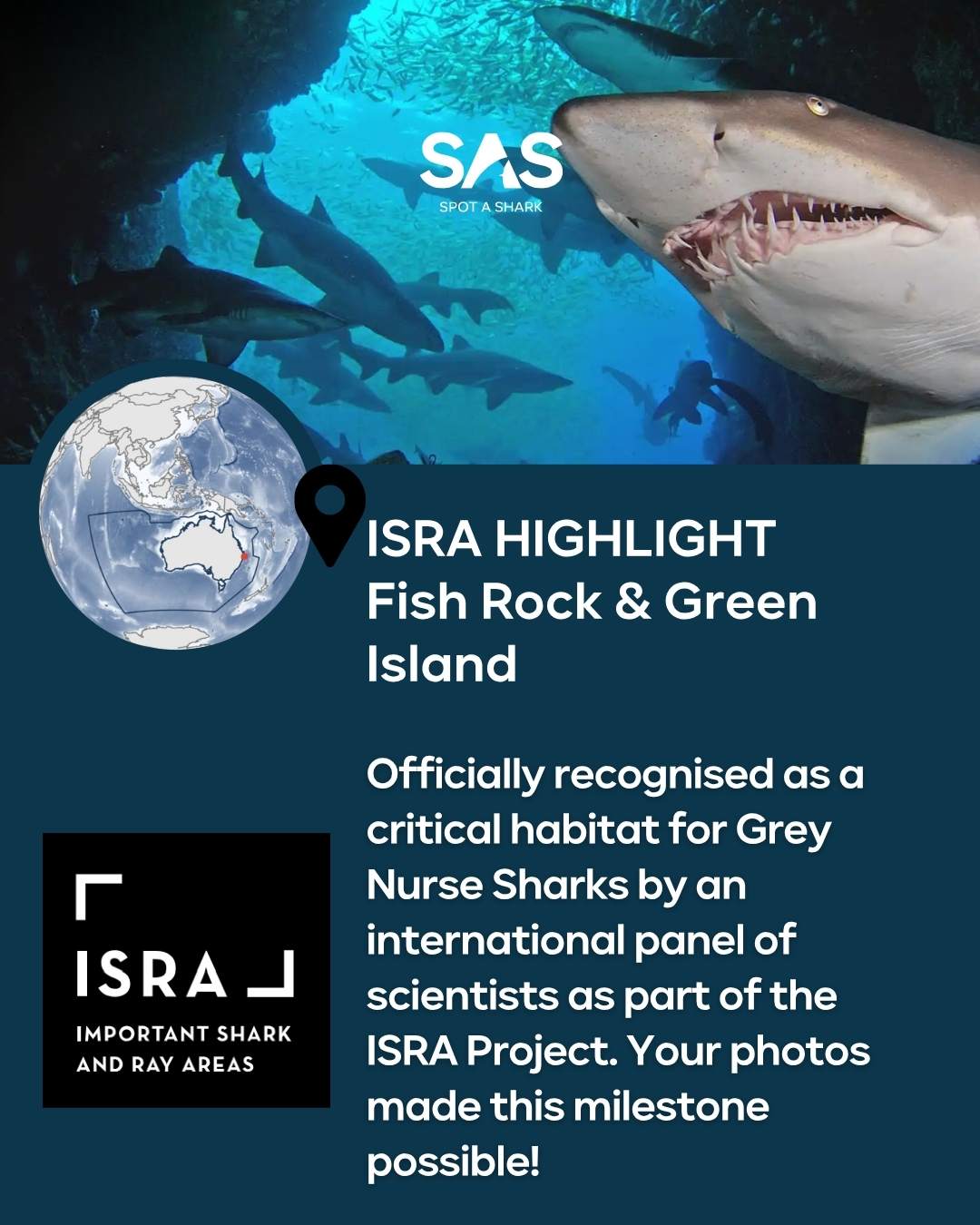
In February 2026, research contributed by Spot a Shark and our community partners helped secure ISRA status for 15 critical habitats along our coast. This global recognition is a massive win for the Grey Nurse Shark population! Click below to read the full reports.