About Spot a Shark
Monitoring grey nurse sharks to achieve greater protection for them
Spot a Shark is a citizen science project focused on protecting critically endangered grey nurse sharks on Australia’s East Coast (since 2006).
How you can help to save the sharks:
- Help to reduce shark by-catch by avoiding, or buying certified sustainably caught tuna. Remember, pole-and-line fisheries result in the least amount of by-catch.
- Know what you’re eating! Could your chip-shop fish actually be shark? Look out for sustainable seafood initiatives and certified fish.
- Check the label. Have a look through your cosmetics to see whether they contain squalene. Next time you shop, avoid this product if you can.
- Use your voice and your vote. Educate others and help us to get sustainable shark fisheries onto the political agenda.
- Reduce, reuse and recycle. Take action in your day-to-day life to reduce your greenhouse gas emissions and protect our oceans.
Read more on the Save Our Seas website
What We Do:
- Collect photos of grey nurse sharks encounters from the diving community.
- We use AI to identify individual sharks from their unique spots.
- This non-invasive technique helps track shark health, location, and population trends.
- Spot a Shark has been conducting regular surveys of the grey nurse shark population along the east coast of Australia since the year 2000 and have collected over 12,000 images.
- We raise awareness about these sharks, and deliver training courses to the public.
- We have supported shark rescues of injured sharks with the help of Sea Life Sanctuary.
- Campaign to help increase protection for these critically endangered sharks so that future generations can also enjoy diving with them in years to come.
Your Contribution Matters:
- Submit your grey nurse shark photos
- Help scientists understand and protect this amazing species
Spot a Shark's Success Stories
Establishing a code of conduct for divers
The Spot a Shark team conducted rigorous studies to understand how scuba divers influence grey nurse shark behaviour. Our research showed that divers adhering to the National Code of Conduct and following dive briefings have no long-term negative impact on these magnificent creatures.
While our studies indicated that large dive groups (6+ divers) in close proximity to shark aggregations can temporarily disrupt shark behavior (Barker et al 2011 a-b), these effects are short-lived. Our findings were published in peer-reviewed journals and contributed to the development of government guidelines for sustainable grey nurse shark diving in popular dive sites.
Global recognition of grey nurse shark aggregation sites
Thanks to the hundreds of photos submitted by our community, the Spot A Shark team were able to compile data about the Grey Nurse Shark aggregation sites. Through the IUCN Important Shark & Ray Area (ISRA) Project, an international panel of scientists has reviewed our data and officially recognised these areas as critical habitats. This global status wouldn't be possible without our dedicated citizen scientists.
You can learn more about the ISRA project and the sites that received recognition by reviewing their website here.
Photo ID
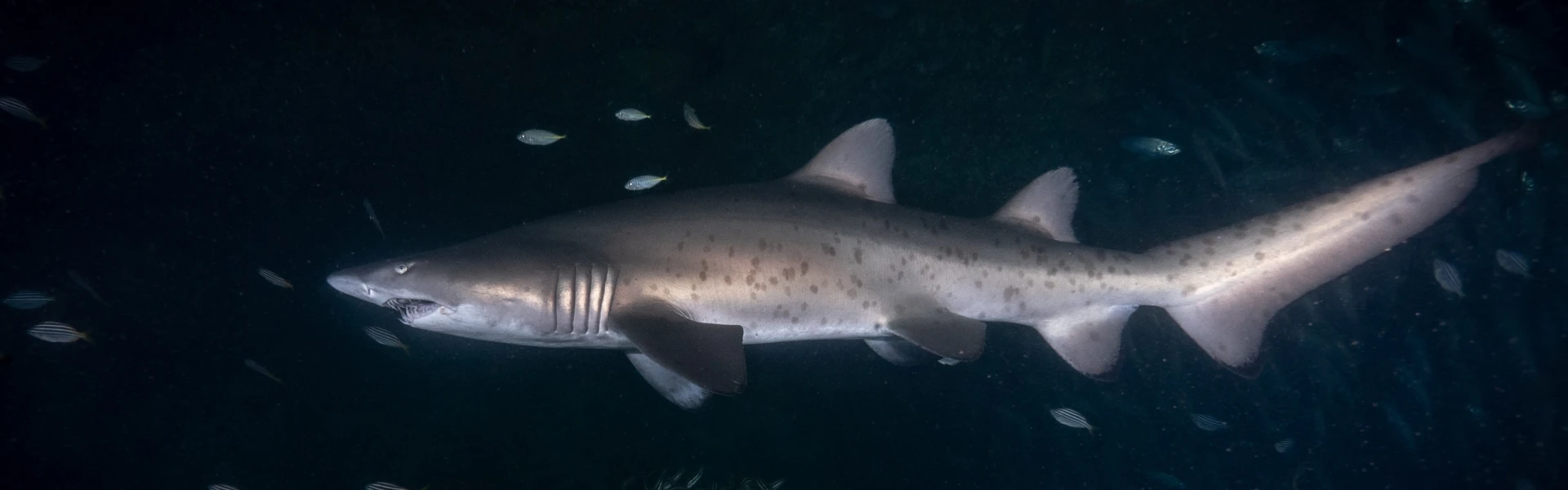
This species of shark has unique spot patterns along their flanks which can be used to identify individuals from one another. The Spot a Shark team reviews images collected by our team, shared with us by email and other social media channels, or uploaded directly to our parent sharkbook’s database to identify individuals. The Spot a Shark team collaborates with scientists to deepen our understanding of grey nurse sharks. By analysing unique spot patterns on individual sharks, we track their movements, health and behaviour. The Spot a Shark team use these images to advocate for better protection of not just the sharks, but their homes too.
This research is crucial for developing effective conservation strategies. Our data also highlights the threats posed by recreational fishing, particularly the harmful effects of ingested hooks. By working closely with scientists like Dr Simon Pierce, Dr Ross Dwyer, Dr Adam Stowe, Dr David Harasti and Dr Carley Fitzpatrick, and sharing our findings, we aim to influence policy decisions that protect these remarkable creatures.
Shark Rescues
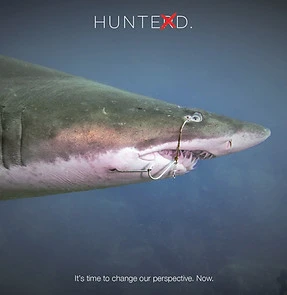
The Spot a Shark team has been involved in rescuing a number of sharks by coordinating responses from government approved vets. One such shark had a hook attached to its eye and mouth as shown here. The team were able to assist to help safely remove this hook and let this shark live her best life.
If you spot a shark in need of a rescue you can contact us, or go directly to our partners at Sea World Foundation.
Advocating for the removal of shark nets
Shark nets are killing grey nurse sharks.
- For decades, NSW and QLD have used shark nets as part of bather protection programs, but these nets are failing to deliver on their promise. Instead, they’re causing a marine crisis and add risk to swimmers.
- Ineffective: 90% of what the nets catch and kill are non-target harmless species.
- Deadly: Thousands of innocent animals, including endangered grey nurse sharks, turtles, seals, dolphins, whales and other endangered species, die in these nets each year.
- Attractants: By providing an easy food source the nets attract predatory sharks towards swimmers.
- False sense of security: Contrary to popular belief, these nets do not span the entire beach, they do not reach the floor and do not reach the surface. The concept is as ridiculous as placing a volleyball net between you and the ocean. Sharks swim over, under and around the nets.
Modern alternatives to shark nets exist, and we’re making progress. Through advocacy we have successfully increased the use of drones in the management of shark-human interactions. Nets were first installed to "rid the ocean of sharks" back in 1937 when little was understood about sharks and their key role they play in oceans.
The government is slowly moving in the right direction. But we need your help to finish the job.
Contact your local MP and demand an end to shark nets. Together, we can protect our oceans and save countless lives.
Community
The Spot a Shark initiative has been instrumental in uniting divers across the East Coast of Australia. Our platform has created a thriving community where individuals can share their experiences, knowledge, and passion for these magnificent creatures. By working together, we’re raising awareness about the plight of sharks and driving positive change. Join us in protecting these vital marine predators for future generations.
Follow us on our socials @spotashark
In the media